The capture and extraction of Venezuelan President Nicolas Maduro together with his wife, Cilia Flores, as part of a shocking special military operation by the United States, raises profound questions about the future of China’s relations with Venezuela, as well as about the competition between the United States and China in the region.
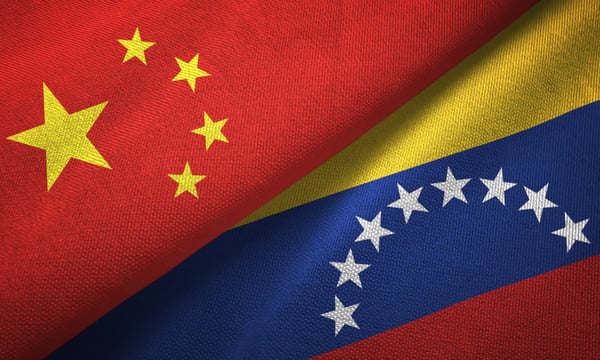
Venezuela is one of China’s closest political and economic partners in Latin America. Relations were consolidated with the rise to power of Hugo Chávez in 1999, based on massive Chinese loans to finance infrastructure and oil exports. From 2013, Maduro represented a deepening of the relationship.
China currently buys almost all of the oil produced by Venezuela. This is a very heavy type of crude that requires a complex refining process. Despite the substantial oil purchases made, it is estimated that Venezuela owes China around $20 billion under unfulfilled contracts based on oil supply. At present, Venezuelan production is barely around 700,000 barrels a day (b/d), far from its enormous potential. For this reason, this supply has long ceased to be decisive for China.
Nevertheless, Venezuela has remained in recent years a key diplomatic ally for Beijing in the region. China has invested not only in Venezuelan oil, but also in telecommunications and other strategic sectors, although the implementation of these projects has been very uneven due to the unstable economic and social environment of the country.
China reacted with great harshness to the U.S. intervention in Venezuela. Unsurprisingly, China considered that Washington’s actions constitute “a clear violation of international law and of the Charter of the United Nations, by undermining the sovereignty and security of a sovereign State.” In this regard, China coincided with the bulk of the international community. But Beijing also demanded the immediate release of Maduro and his wife, something that was only demanded by Russia and Iran, precisely the other two key partners of the regime.
According to press reports based on official statements by the Chinese government, Xi Jinping described the U.S. action as “unilateral and intimidating behavior,” noting that “no country can act as the world’s police” and that respect for international law “must prevail.” Unlike other periods of peak tension with the United States, this time Beijing did not promote any direct consultation with Washington on the matter.
There is no doubt that the fall of Maduro was a hard blow for China, especially due to the timing of the operation. At the very moment when Maduro’s capture was taking place, Qiu Xiaoqi, Xi Jinping’s special envoy, was paying a high-level official visit to Venezuela. In fact, the meeting with Qiu was Maduro’s last public activity before his extraction to the United States. This was probably perceived as a painful humiliation for Xi within Chinese Communist Party (CCP) circles. China not only failed to prevent Maduro’s fall, but the dictator was kidnapped in the face of Xi’s envoy in Caracas.
Looking ahead, it is likely that China will raise the tone of its diplomatic complaints and do everything possible to preserve its economic interests, but it is very unlikely that it will exercise any practical intervention in favor of Venezuela. Although the U.S. attack justifies the more confrontational positions of Beijing’s hawks, everything indicates that Xi’s priority will continue to be preserving trade negotiations and the relative stability achieved in the relationship with Washington. This implies China will not take any action that could jeopardize the celebration of the bilateral summit between U.S. President Donald Trump and Xi scheduled for April in Beijing.
To avoid disruptions, China would already have secured oil shipments from Venezuela from the United States. In fact, Trump publicly suggested that, under U.S. control, Venezuelan oil exports to China would increase. However, this supply matters relatively little to China right now: although it buys approximately 68 percent of Venezuela’s oil exports, this represents an insignificant proportion of China’s total imports.
On the other hand, China will surely take advantage of the situation to reinforce its international anti-imperialist narrative and its support for multilateralism, in the face of an increasingly aggressive United States. The Trump administration has even threatened historic NATO allies such as Denmark.
China will also seek to dissociate the Taiwan issue from the actions of the United States, Russia, and other powers against international law. For China, Taiwan is an exclusively internal political matter, and it will continue to strongly reject any type of insinuation, interference, or comparison in this regard. Therefore, it is very unlikely that the U.S. attack on Venezuela will alter China’s strategy with respect to Taiwan. China’s recent military exercises around the island were rather a response to growing tension with Japan and to the historic arms sale of $11 billion announced by Trump last December.
The crisis in Venezuela could also prompt greater Chinese involvement in Latin America to protect its economic interests, historically related to the supply of raw materials, food and energy security. One issue to watch closely will be whether the military sales already planned by China to countries such as Cuba and Colombia are affected moving forward. Defense cooperation with China is one of the main red lines drawn by Trump in his “Corollary to the Monroe Doctrine.”
China will seek especially to safeguard its strategic interests in countries that have chosen to align themselves with the United States, such as Argentina, Paraguay, Bolivia, Ecuador, and El Salvador. Chile and Honduras will soon join this growing group. In any case, China will focus on preserving trade links and the continuity of investments in strategic projects.
Here Brazil stands out, a country that for now continues to be China’s biggest trade partner and most steadfast ally in the region. But that too could change in favor of the United States, depending on the outcome of the crucial upcoming presidential election in October.