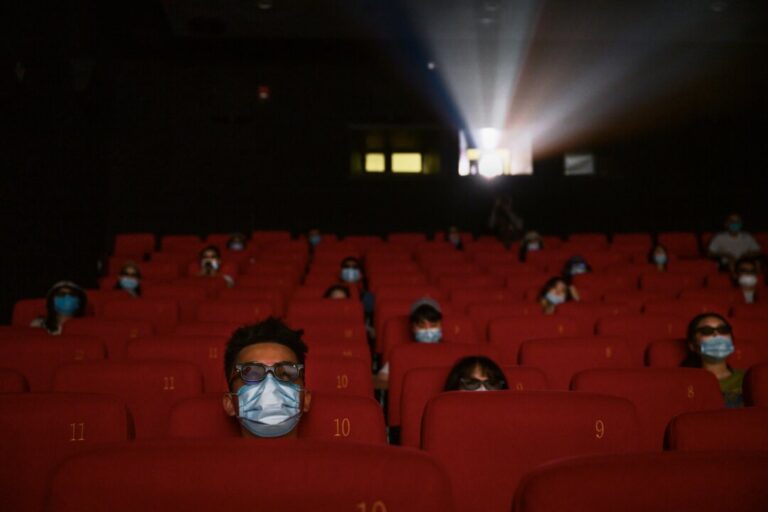
The Chinese regime has censored a popular video on social media that contains a list of banned documentaries in China, which has attracted renewed public attention to the ruling Chinese Communist Party’s tightened control over such films.
The video, titled “Documentaries Shelved for Being Too Real,” lists 32 documentaries made in the past three decades, most of which reflect the reality of the lives of grassroots people in China. These documentaries cover themes such as the plight of migrant workers, the suffering of dust lung disease patients, the brutality of the Chinese Communist Party’s law enforcement at the grassroots level, the hardships of the floating population, and historical trauma suffered since the Chinese communist regime was established in 1949, among others.
The banned documentary list includes award-winning and internationally acclaimed works such as “Petition” (2009), “Please Vote for Me” (2007), “Tie Xi Qu: West of the Tracks” (2002), “Police Station” (2010), “Sanhe Human Resources Market” (2018, produced by Japanese broadcaster NHK), and others.
Although most of the documentaries on the list have been screened at film festivals or circulated within limited circles, they have faced significant difficulties in securing public screenings in mainland China.
Currently, the video of the banned documentary list and content such as screenshots and texts introducing the list have been removed from the internet in China.
Meanwhile, a more comprehensive but not exhaustive list of banned films, including documentaries, in mainland China produced from 1950 to 2013 has been compiled and posted on China Digital Space, a platform and database under the independent, U.S.-based bilingual news website and archive China Digital Times.
The list has several hundred entries, including both feature films and documentaries that touch upon the reality of China under the rule of the Chinese Communist Party (CCP), produced by Chinese and international filmmakers.
In a caveat, China Digital Space explained that the list also includes films and documentaries that were previously banned—either in their entirety or in part—but have since been released after re-editing.
The list features independent productions, works depicting the lives of ordinary people at the grassroots level, and films and documentaries that do not adhere to China’s official “mainstream” narrative, according to China Digital Space.
It also acknowledged that the list of banned films in China is not complete and welcomes the public to send it more entries.
The China Digital Space list includes high-profile documentaries produced globally. Examples include “Journey Through Wind and Rain” (2004) by NTD, a sister outlet of The Epoch Times, depicting Falun Gong practitioners’ faith and courage under the CCP’s persecution; “Decoded: Banned Books in China” (2013) by Voice of America; and “Ai Weiwei: Never Sorry” (2012) by Alison Klayman, which captures the Chinese artist’s activism and struggles with authorities, including the 2008 Wenchuan earthquake investigation and his 2011 secret detention.
The entries on China Digital Space’s list overlap with some on the list that was deleted from the Chinese internet, such as the critically acclaimed “Petition.”
“Petition”—an independent documentary directed by Zhao Liang—stands as a landmark work in the history of Chinese independent cinema. Filmed over 12 years from 1996 to 2008, the film tracks the community of petitioners from all over the country staying in Beijing’s “Petition Village.”
The Chinese regime set up its petition system decades ago, inviting citizens to directly address with central authorities grievances against local officials. Numerous people from across the country travel to Beijing each year to file their petitions. In response, CCP local officials typically send police or hire guards to intercept petitioners, stop them from entering Beijing, and throw them into black jails, where they are often beaten or tortured.
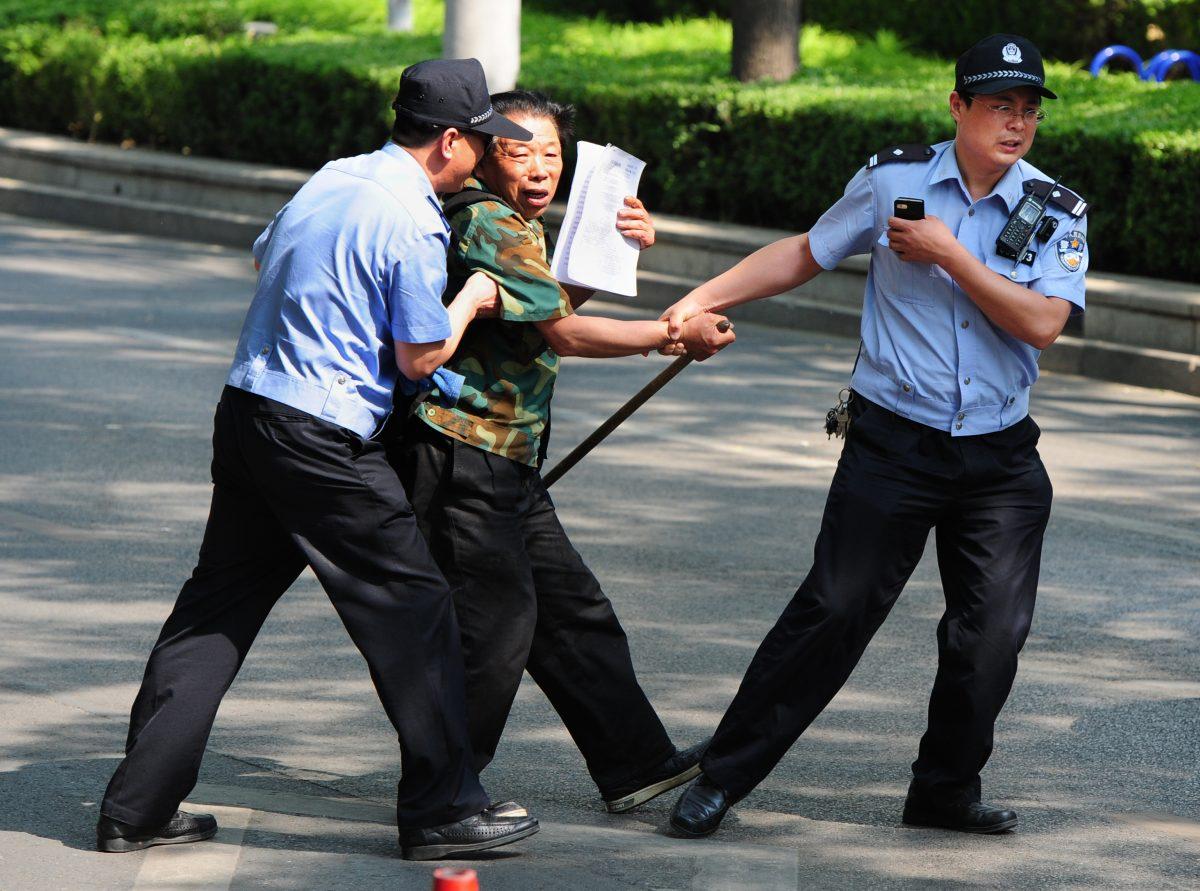
A petitioner is detained by police outside the Chaoyang Hospital, where people were protesting about medical and land grab issues, in Beijing on May 8, 2012. Mark Ralston /AFP/Getty Images
The documentary offers a comprehensive chronicle of their journey: from filing grievances locally to traveling to the capital to defend their rights to subsequently enduring a cycle of repeated petitioning, interception, and filing petitions again. Without subjective commentary, the documentary directly lays bare the plight of the suppressed groups as they navigate the arduous, long-term struggle to seek justice.
“Petition” won nine film festival awards, including the Humanitarian Award for Documentaries at the 34th Hong Kong International Film Festival, Best Documentary at the 29th Hawaii International Film Festival, and the Jury Award at the Festival International du Film des Droits de I’Homme à Paris.
“Petition” has been banned in China.
Tightened Control
The Chinese regime has always harshly censored culture and the arts since taking control of mainland China in 1949. In 2001, the Chinese regime’s State Council released a comprehensive policy on it—the Regulations on the Administration of Films—in which it details the standards that films must strictly adhere to in order to pass review. Under the section on “Film Censorship,” all 10 standards concern films’ ideology and political correctness, with only a brief mention that “the technical quality of films shall comply with national standards.”
Fang, a scholar specializing in internet content censorship research in China who gave only his last name out of fear of reprisal, told The Epoch Times that the CCP’s information control has shifted from “deleting individual pieces of content” to “blocking the dissemination of entire categories.”
“The authorities’ issue with documentaries is that, once they form a series, they construct a systemic understanding [of reality],” he said.
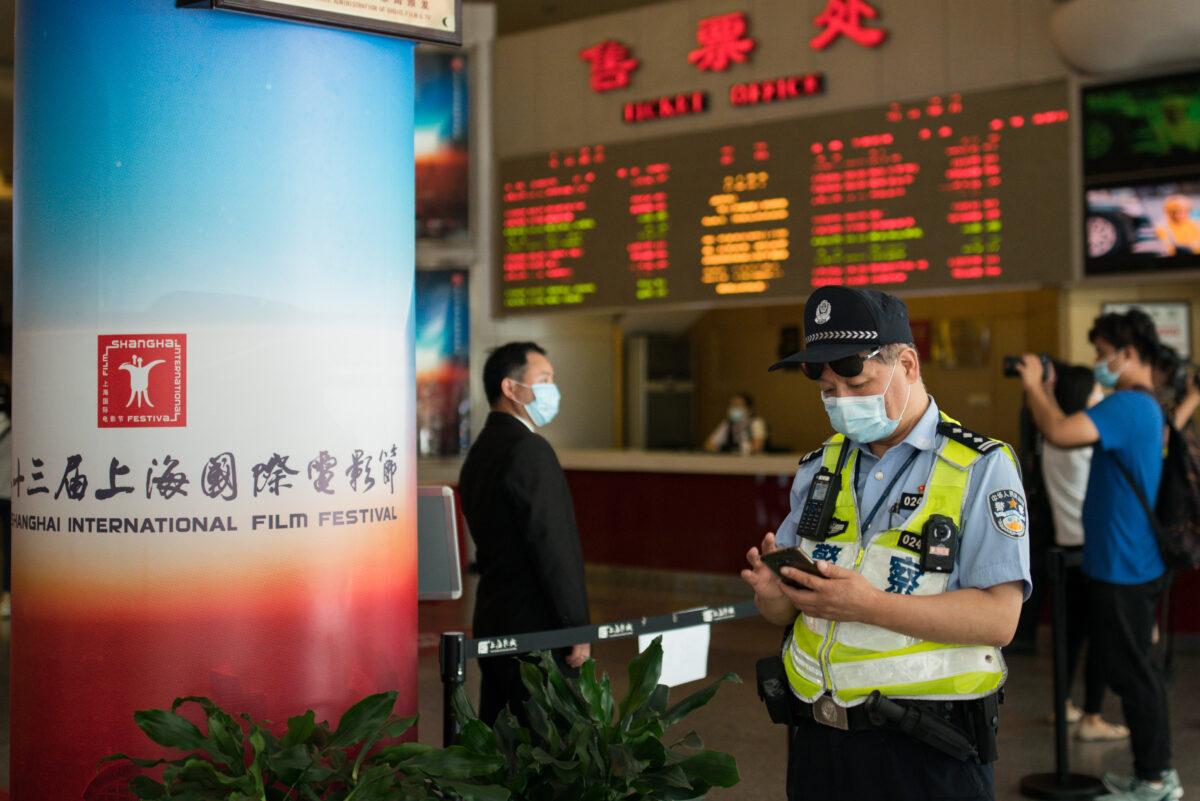
A police officer looks at his cellphone at Shanghai Film Center in Shanghai on July 25, 2020. Yifan Ding/Getty Images
He said that the brief appearance and quick deletion of this list of 32 documentaries demonstrates that “under a totalitarian regime, when reality cannot be completely denied, the authorities opt to suppress the means by which that reality is documented.”
“In an environment incapable of accommodating truthful records, the images themselves come to be perceived as a threat,” he said.
Yu Tu, a filmmaker based in Songzhuang who used a pseudonym out of fear of reprisal, told The Epoch Times that “the creative environment in China has become extremely hostile.”
“We have produced numerous documentaries reflecting the realities of contemporary China and the lives of ordinary people at the grassroots level,“ he said. ”Yet, every time we submitted these works to authorities for review, they were rejected. The CCP authorities are controlling everything. Just last year, many documentaries produced by independent filmmakers were banned.”
Wang Xin contributed to this report.