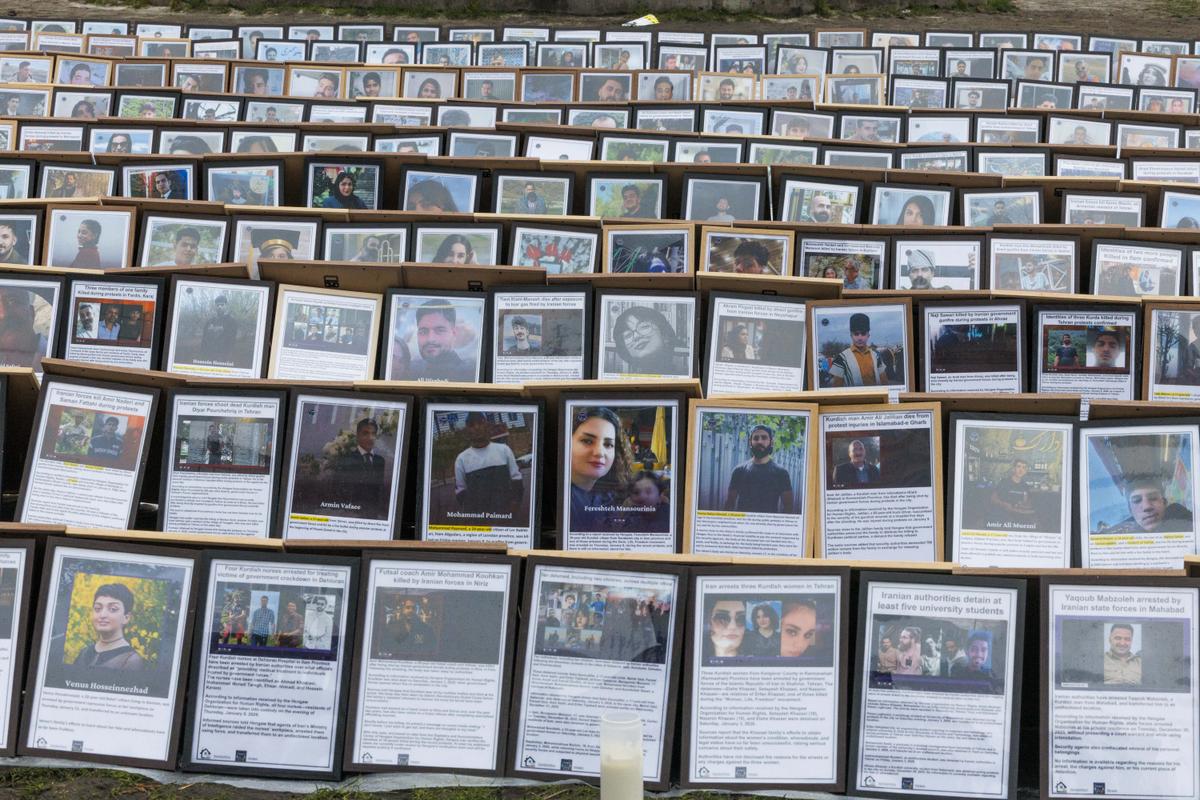
A visual action consisting of 500 photo frames displaying photos of victims killed by the Iranian regime, at the European quarters of Brussels, on Feb. 5, 2026. Nicolas Maeterlinck/BELGA MAG/Belga/AFP via Getty Images
U.S. President Donald Trump agreed to a two-week ceasefire with the Islamic Republic of Iran on April 7. The agreement came just hours before a deadline he had set for Tehran to accept terms or face strikes on key infrastructure, including bridges and power plants. However, events before that moment show that Iranian authorities put civilians in danger, analysts and human rights advocates say.
Officials Urge Civilians to Form ‘Human Chains’
On April 6, a day before the deadline, Iranian officials and military figures called on civilians to gather around power plants and sensitive infrastructure. The call included children and teenagers.
The aim was to form what authorities described as human chains. This would have raised the civilian cost of any U.S. or Israeli strikes.