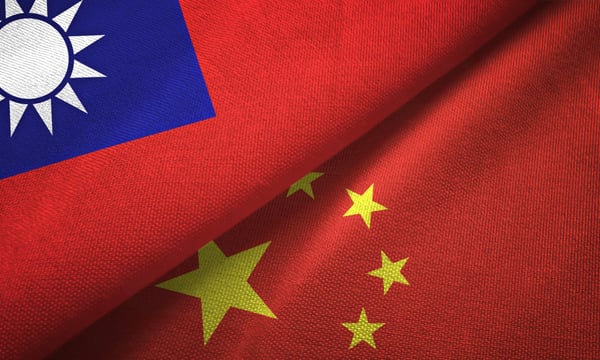
Over the past three decades, public attitudes on both sides of the Taiwan Strait have shifted in ways that are strikingly consistent and difficult to reverse. In Taiwan, identification with a distinct Taiwanese – rather than Chinese – identity has risen steadily since the early 1990s, accelerating at key political inflection points and most pronounced among younger generations. The gap between those favoring eventual independence and those favoring unification has widened significantly, while the largest single position now favors maintaining the status quo indefinitely. This trajectory has been reinforced by Beijing’s actions, particularly its military pressure on Taiwan and its treatment of Hong Kong.
On the Chinese side, the picture is more nuanced than official rhetoric suggests. Mainland Chinese publics tend to have relatively warm views of the Taiwanese people, even as they remain skeptical of Taiwan’s government, and support for a military resolution of the cross-strait dispute is weaker and more contingent than state messaging implies. Taken together, survey evidence from both sides of the strait points less to two populations on a collision course driven by popular passion than to a quieter pattern of structural divergence. This widening gap in political identity has long-term implications for the feasibility of any negotiated settlement between Taipei and Beijing.
Since 1992, the Election Study Center at National Chengchi University (NCCU) has asked respondents in Taiwan: Do you think of yourself as Taiwanese, Chinese, or both? The answers, tracked annually ever since, have produced one of the most consequential longitudinal datasets in modern political science.
At the outset, fewer than one in five respondents – 17.6 percent – identified as “Taiwanese only.” About a quarter said “Chinese only,” while a plurality, nearly half the island, chose a dual identity.
Three decades later, the pattern has effectively reversed. By 2023, roughly 63 percent of respondents identified as “Taiwanese only”; the “Chinese only” category had fallen to around 2-3 percent; and dual identifiers accounted for about 30 percent. This amounts to a 45-percentage-point increase in exclusive Taiwanese identification, driven not by revolution or war, but by the gradual accumulation of democratic experience, generational replacement, and exposure to Beijing’s conduct.
The demographic contours of this shift are sharp. Pew Research Center’s 2023 Global Attitudes survey found that 83 percent of those under 35 identified as solely Taiwanese, compared to lower, though still majority, rates among older cohorts. The same Pew survey found that emotional attachment to mainland China tracks strongly with age: 46 percent of those 35 and older reported feeling connected to China, versus just 26 percent of those under 35. Women are also slightly more likely than men to identify as solely Taiwanese (72 versus 63 percent). And political affiliation matters enormously: DPP (Democratic Progressive Party) supporters align strongly with a solely Taiwanese identity, while supporters of the KMT (Kuomintang), which has historically been closer to Beijing, are more likely to identify as both Chinese and Taiwanese, or as Chinese only.
Views of China as a government have followed a parallel trajectory. The Pew 2020 Global Attitudes survey found that just 35 percent of Taiwanese gave positive marks to mainland China as a whole, with roughly 60 percent holding unfavorable views. By 2023, Pew found that 66 percent of Taiwanese described China’s growing power and influence as a “major threat” to Taiwan – more than those naming the United States (45 percent) or Russia (25 percent). Strikingly, this threat perception cuts across the political spectrum: 58 percent of those who identified themselves as primarily Chinese broadly considered China’s influence a threat.
The turning points in the NCCU trend line are instructive. The data does not simply slope upward in a smooth curve; it lurches at specific moments. The 1995-96 Taiwan Strait Missile Crisis, triggered by President Lee Teng-hui’s visit to the United States and Beijing’s subsequent missile tests near Taiwan in an attempt to intimidate voters ahead of the island’s first direct presidential election, produced a measurable backlash. The 2014 Sunflower Movement, which blocked a cross-strait trade pact, marked the moment economic integration with China shifted from aspiration to anxiety. But the most dramatic inflection point in the entire 30-year dataset comes in 2019-2020. The NCCU data recorded an 8.5-percentage-point jump in “Taiwanese only” identification between June 2019 and June 2020 alone. The reason is not hard to identify: Hong Kong.
Beijing’s crackdown on the 2019 Hong Kong protests, and the subsequent imposition of the National Security Law in 2020, transformed an abstract fear into a concrete example. The slogan “Today’s Hong Kong, Tomorrow’s Taiwan” had existed since the 2014 Sunflower era; suddenly, it felt prescient. Academia Sinica’s China Impact Studies survey in March 2019, conducted before the protests had fully unfolded, already found that 79 percent of Taiwanese rejected Beijing’s proposed “one country, two systems” framework, with 84 percent opposing the use of force against Taiwan.
After 2019, those numbers hardened further. The NCCU data shows the gap between those favoring eventual independence and those favoring unification widening from less than 3 percentage points in 2018 to more than 20 points by 2020. At the same time, the preference for maintaining indefinitely the status quo – neither independence nor unification – has itself become the largest position, held by around 33 percent of respondents as of 2024, up from 25.5 percent in 2020. Xi Jinping’s January 2019 speech marking the 40th anniversary of the “Message to Compatriots in Taiwan,” which proposed Hong Kong’s model for Taiwan, appears to have backfired.
What makes this story more than a Taiwanese one is what surveys reveal on the other side of the strait, a more challenging research environment. A 2024 survey of Chinese citizens commissioned by the Chicago Council on Global Affairs and the Carter Center found that 91 percent of respondents described the Taiwanese people – using the official framing of “Taiwanese compatriots” – as friends to China. That is by far the highest rating any people or country received in the survey. By comparison, only about 17 percent of Chinese respondents described the United States as a friend.
Yet that warmth does not extend to Taiwan’s government. The same survey found that only 44 percent considered Taiwan’s current government a friend to China – itself a surprisingly high figure given that Beijing officially labels Taiwanese President Lai Ching-te a “dangerous separatist.” And on the question of force, the data complicates the hawkish image projected by Chinese state media. A 2025 survey by the Carter Center and Emory University found that 55.1 percent of Chinese respondents agreed that “the Taiwan problem should not be resolved using force under any circumstances,” against 24.5 percent who disagreed. This is a shift from a 2023 study that found 55 percent of Chinese urban respondents supporting full-scale war for unification. Analysts have debated this methodological discrepancy, but the directional message is consistent: Chinese public support for military action is softer and more contingent than official rhetoric implies.
The Chicago Council-Carter Center data also found that 57 percent of Chinese respondents named a U.S.-China conflict over Taiwan as a major threat to China itself. This is the psychology of a population that wants unification in the abstract but is not eager to pay for it in blood and economic rupture. As Brookings researchers analyzing the same data observed, the Chinese public’s warm view of Taiwanese people is likely one reason they hesitate to endorse a military solution; you do not easily go to war with people you consider family.
What explains these twin trends? On the Taiwan side, several overlapping forces are noteworthy. Generational replacement is structural and inexorable: each new cohort enters adulthood in a fully democratic Taiwan where “Chinese” identity carries political rather than merely cultural meaning. Democratic consolidation has made Taiwanese identity sticky; to be Taiwanese is now, for many residents, to affirm a set of democratic values that distinguishes the island from the mainland. And Beijing’s own behavior has repeatedly accelerated the very drift it seeks to reverse. The NCCU data makes this embarrassingly plain: every major episode of Chinese military intimidation – including the 1996 missile tests, the 2022 exercises following Nancy Pelosi’s visit, and the repeated PLA incursions into Taiwan’s air defense identification zone – appears in the trend line as a moment when opinion hardened.
On the Chinese side, the distinction ordinary citizens draw between the Taiwanese people and the Taiwanese government likely reflects a combination of genuine cultural affinity based on shared language, family ties that predate 1949, a shared pop culture ecosystem, and the long-term success of official “compatriots” framing. But the Brookings researchers note that if propaganda were simply overriding genuine sentiment, it would be hard to explain why Chinese respondents view Taiwanese so much more warmly than most of their other neighbors. Something real is being measured here.
The uncomfortable implication of all this data, read together, is that the political window for any negotiated cross-strait arrangement is narrowing, not because either side is moving toward confrontation, but because the populations are drifting apart in ways that are structurally hard to reverse. Taiwanese who once described themselves as “both Taiwanese and Chinese” were the natural constituency for dialogue; that group has shrunk from nearly half the island’s population in 1992 to roughly 30 percent today, and the youngest cohort is almost entirely in the “Taiwanese only” camp. Survey data has been quietly documenting the disappearance of the political center of gravity for cross-strait reconciliation, one annual survey at a time.
Beijing reads these polls too. The question is what it concludes from them. Survey data suggests that coercion has consistently backfired, that the Chinese public is not clamoring for war, and that the Taiwanese people, however firm their identity, still hold no particular animosity toward mainland Chinese as people. That is not nothing. It is, in fact, the narrow remaining space within which a less catastrophic future might still be constructed. Whether anyone in a position of power is inclined to use it is a different question entirely.
In late 2025, Lai announced a special defense budget of around $40 billion – to be spent over eight years – alongside a commitment to raise defense spending from roughly 2.4 percent of GDP to 5 percent by 2030. The Trump administration also approved an $11.1 billion arms package for Taiwan, one of the largest in years. However, the proposed budget was repeatedly blocked by a legislature controlled by the KMT and its allies, who advanced a rival bill that cut roughly 70 percent of the original funding. Days later, Beijing staged two days of large-scale live-fire military exercises around the island, dubbed “Justice Mission 2025.”
Meanwhile, Japanese Prime Minister Takaichi Sanae broke with decades of Japanese strategic ambiguity by suggesting her country’s military could become involved if China were to act against Taiwan – a statement that drew fierce and sustained diplomatic protests from Beijing. With the Liberal Democratic Party achieving a historic lower house supermajority in the February election, she has pushed to raise defense spending above 2 percent of GDP and has expressed ambitions to revisit Japan’s three non-nuclear principles and, eventually, Article 9, the pacifist clause of Japan’s postwar constitution.
These developments underscore the timeliness of the cross-strait question: recent military signaling by Beijing, shifting defense policies in Taipei and Tokyo, and renewed uncertainty in U.S. strategy are rapidly reshaping the regional security environment. How a more unpredictable Washington, a more assertive Tokyo, and a more coercive Beijing interact around Taiwan will, in turn, shape the conditions under which public attitudes on both sides of the strait continue to evolve.
Grounded in three decades of survey data, this analysis suggests that such cycles of action and response are more likely to widen the identity gap than to close it, leaving the prospects for a negotiated settlement increasingly remote. Yet, KMT chairperson Cheng Li-wun’s arrival in China on April 7 for a six-day visit – the first by a sitting KMT leader in nearly a decade – suggests that party-to-party dialogue, however contested within Taiwan, has not been entirely foreclosed. Whether it amounts to anything more than symbolism remains to be seen.