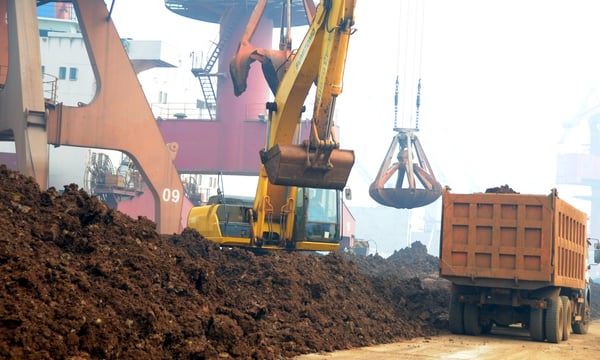
Rare earth supply chains have become a central concern in global politics. As China has increasingly deployed export controls on rare earths, the United States and its allies have stepped up efforts to diversify supply chains and reduce reliance on Chinese markets. Yet amid this intense focus on restrictions and decoupling, far less attention has been paid to how China is responding to U.S.-led diversification efforts.
Beyond supply cutoffs, China is seeking a multilayered approach that integrates strengthened industrial policy, inducement-based cooperation, and cautious calibration of export controls. While the coercive dimension of China’s rare earth power is undoubtedly salient, focusing on it alone risks underestimating China’s adaptive capacity to reinforce its industrial base and manage U.S.-led diversification pressures.
Strengthening Industrial Policy at Home
Rare earths are not inherently scarce, as many countries hold substantial reserves. China’s advantage in rare earths has never rested solely on resource endowment, but on its ability to integrate extraction, processing, and downstream manufacturing at scale. The rapid development of China’s rare earth sector can be largely attributed to state-level strategic prioritization and a state-led industrial policy that has aligned technological upgrading, capital investment, and regulatory arrangements across the value chain.
Beijing has long emphasized technological development and the need to move beyond raw-material extraction toward higher-value-added segments. The technological upgrading in the rare earth sector has been reinforced by China’s capital allocation model, which channels generous credit toward the sector. While the development model has incentivized oversupply and depressed prices, it has also contributed to entry barriers for foreign firms, constraining their ability to compete in global markets. In addition, environmental regulatory conditions in earlier phases of China’s economic development facilitated large-scale processing and rapid capacity expansion, allowing China to achieve economies of scale that latecomers have struggled to replicate.
As the strategic value of rare earths has increased, recent policy efforts have focused on advancing China’s transition from a rare earth producer of quantity to one of quality. This shift has involved increased government funding, tighter regulatory standards, the promotion of mergers among key producers, and a stronger emphasis on midstream and downstream upgrading linked to electric vehicles, renewable energy, and advanced manufacturing. These measures seek to anchor China’s rare earth advantage not in sheer output volume, but in industrial capacity, technological depth, and systemic coordination across the value chain.
The Possibility of Inducement-based Cooperation
Current policy debates have largely focused on the coercive dimensions of China’s rare earth power. But economic interdependence can be used as both carrots and sticks. Long before rare earths became a focal point of great power competition, China had embedded itself in overseas critical mineral and metal projects through its Going Out strategy and the Belt and Road Initiative.
As U.S.-led decoupling efforts accelerate, rare earth leverage can also be used as an inducement. Beijing has increasingly explored ways to leverage its processing capacity and technical expertise to cultivate closer economic ties with other economies. A case in point is the reported discussion between China and Malaysia in October 2025 on a potential partnership to build a refinery, which could involve China’s technical and technological assistance. The facility is expected to process critical inputs essential for electric vehicle motors, wind turbines, defense technologies, and advanced electronics.
Because direct technology transfer would run counter to the regulatory framework Beijing has promoted, Chinese state-owned enterprises may instead engage through joint ventures with controlling stakes, equipment provision, and engineer training. Such arrangements enable China to externalize selected stages of production and support industrial development in partner economies while retaining effective control over core technologies and downstream integration. By offering limited assistance and market access as carrots, Beijing can strengthen its position within evolving supply networks while mitigating the risk of broad realignment toward the United States.
Cautious Calibration Rather Than Blunt Weaponization
While Beijing’s rare earth export controls can impose costs on the targets, the broader consequences are increasingly evident in the coordinated responses of the United States and its allies, who are restructuring supply chains in anticipation of future Chinese controls. In early 2026, a G-7 ministerial meeting in Washington focused specifically on rare earths and related supply chain resilience, exploring measures like price floors and international incentives to reduce reliance on Chinese supply.
This recent move has been reinforced by a series of U.S.-led initiatives aimed at building alternative supply chains. Through increased state funding and expanded cooperation with allies such as Australia and Japan, as well as partnerships with Southeast Asian countries including Malaysia and Thailand, Washington has sought to accelerate capacity-building and institutionalize diversification outside Chinese markets, rather than treating supply disruptions linked to China’s controls as episodic shocks.
While China’s restrictions have had short-term effects, they also risk accelerating decoupling dynamics in the West. Aware of these risks, Beijing has avoided using rare earth leverage in a blunt or irreversible manner, instead applying export controls with cautious calibration. The slowdown in rare earth exports after the April 2025 curbs and the subsequent rebound following the London talks later that year, together with the suspension of restrictions imposed in October 2025 after the meeting between U.S. President Donald Trump and Chinese President Xi Jinping, suggest the flexibility built into China’s control regime. The use of export controls as both retaliatory tools and bargaining chips reflects Beijing’s efforts to manage outflows and preserve leverage while avoiding blunt weaponization and conflict escalation.
Conclusion
China’s approach to rare earths under U.S.-led decoupling cannot be understood solely through the lens of export controls. While these restrictions have drawn the most attention, they represent only one dimension of China’s rare earth power. Focusing on supply cutoffs alone, therefore, risks overlooking the broader foundations of China’s rare earth advantage and the flexibility embedded in its use of restrictions.
Rather than relying on outright bans, Beijing is pursuing a multilayered approach that integrates strengthened industrial policy, inducement-based cooperation, and the cautious calibration of export controls. Together, these efforts enable China to reinforce its industrial base, shape the trajectory of diversification, and mitigate the risks of geopolitical escalation in an increasingly politicized global market.