The study of China’s influence in Latin America has, without question, focused primarily on economic and trade relations between the Asian giant and countries in the region. While there is an extensive body of literature examining these ties from multiple perspectives, far less attention has been paid to China’s political and institutional influence.
Existing research has largely concentrated on the Chinese Communist Party’s (CCP) soft power and disinformation efforts – often compared to those of Russia – leaving other instruments of political internationalization relatively underexplored. These include people-to-people diplomacy, Chinese paradiplomacy, and the CCP’s multilateral engagement through platforms such as the China-CELAC Forum, which convenes actors from media, think tanks, political parties, and civil society.
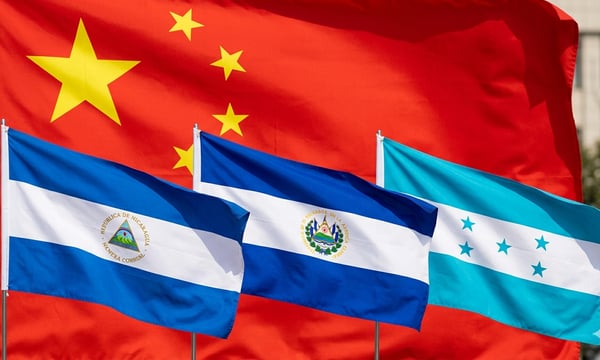
Although these mechanisms are widely deployed in democratic contexts as tools of sharp power, they acquire particular relevance in interactions with non-democratic regimes. In Central America, Nicaragua, El Salvador, and Honduras – classified by V-Dem as a closed autocracy, an electoral autocracy, and a fragile democracy on the threshold of autocratization, respectively – illustrate how such linkages can be instrumentalized in two directions: governments use them to reinforce power concentration, while China leverages them to consolidate its strategic presence. In this sense, cooperation between China and these countries should be understood not merely as an exchange of resources, but as a broader web of institutional, technological, and ideational interactions that may contribute to the reproduction of authoritarian dynamics.
People-to-People Exchanges: Elite Socialization and the Transfer of Practices
People-to-people exchanges constitute one of the most visible, yet often underestimated, instruments of China’s international projection. On the surface, these mechanisms aim to promote mutual understanding between societies. However, as has been documented, they form an integral part of the CCP’s foreign policy and operate under strong state control, building networks of influence that connect foreign actors with China’s political apparatus.
In Latin America, and particularly in Central America, these exchanges have expanded beyond cultural or academic spheres to include sensitive sectors of the state apparatus. Delegations of police officers, military personnel, judges, and prosecutors have participated in training programs in China. There, participants not only acquire technical knowledge but are also exposed to operational doctrines and governance models related to public order control and the administration of justice.
In Nicaragua, for example, officials from the National Police have held bilateral meetings with China’s Ministry of Public Security and participated in training programs that include riot control tactics, the use of drones in policing operations, criminal investigation techniques, and self-defense techniques.
This cooperation also extends to Nicaragua’s participation in Chinese-led international security platforms. Nicaraguan police delegations have attended exhibitions showcasing surveillance technologies, data analytics systems, and urban security management tools developed by Chinese firms, further expanding their exposure to advanced digital monitoring capabilities.
Similarly, in El Salvador, institutional exchanges have involved specific actors within the judicial and security sectors. In July 2024, Chinese Ambassador Zhang Yanhui, accompanied by newly appointed defense attaché Dai Zenggang, held an official meeting with El Salvador’s minister of defense, where both sides discussed expanding cooperation in key defense areas, signaling a deepening of military-to-military engagement.
These interactions extend beyond the defense sphere into the legal and prosecutorial domains. In September 2023, Supreme Court President Óscar López met in Beijing with Zhang Jun, president of China’s Supreme People’s Court, signing judicial cooperation agreements, while in March 2024, Attorney General Rodolfo Delgado met with his Chinese counterpart to strengthen cooperation between prosecutorial institutions.
A similar pattern can be observed in Honduras, where Supreme Court President Rebeca Ráquel Obando participated in a China-hosted judicial cooperation forum in Quanzhou in 2023 and later met with Chinese Ambassador Yu Bo in 2024 to expand bilateral legal cooperation.
These engagements have facilitated the circulation of experiences in judicial digitalization, criminal management, and the construction of the so-called “rule of law,” in a context where the executive branch has expanded its control over the judiciary.
That said, it would be inaccurate to assume that these exchanges lead to the automatic adoption of the Chinese model. Rather, their significance lies in the gradual socialization of political and administrative elites into alternative frameworks to liberal democracy.
As has been noted, these exchanges function less as platforms for horizontal dialogue between populations and more as mechanisms for integrating foreign actors into CCP-led influence networks, where Beijing promotes an idealized vision of one-party rule and development without political liberalization.
These exchanges serve a dual function. For recipient governments, they offer an opportunity to strengthen state capacities – particularly in coercive sectors – without the normative constraints typically associated with Western cooperation. For China, they provide a privileged channel to build long-term relationships with key state actors and to disseminate its models, narratives, and technologies in politically receptive environments.
Technology and Control: The Material Dimension of Cooperation
If people-to-people exchanges operate at the level of elite socialization, the export of technology represents their material counterpart. In Central America, this dimension has developed primarily through the provision of digital infrastructure, telecommunications systems, surveillance platforms, and “smart city” solutions, many of them driven by companies linked to the Chinese state.
In Nicaragua, the expansion of digital infrastructure, with the participation of companies such as Huawei, included direct meetings between company executives and President Daniel Ortega in 2025 to expand telecommunications networks.
The government has also promoted systems such as SINAREM (National Emergency Response System), which integrates command centers, camera networks, data platforms, and real-time monitoring capabilities. This type of technological architecture, based on centralized data and integrated surveillance, has clear applications not only for emergency management but also for social control.
This dual-use character is critical. The same technologies that improve public service delivery can be used to monitor communications, track movement, and anticipate behaviors deemed “risky” by the state. In authoritarian contexts, where control over information and dissent is central, such tools can be incorporated into broader strategies of political control.
El Salvador presents a different but equally significant variation. The National Library in San Salvador, built by Chinese companies, incorporates facial recognition systems and automated services.
In addition, Salvadoran officials have visited companies such as Huawei, China Mobile, and BYD as part of training programs in China, where they are exposed to 5G technologies, connectivity platforms, and digital governance solutions. While introduced under the banner of modernization, these tools expand the state’s capacity to manage data, monitor public spaces, and automate control processes.
Honduras, for its part, remains at a more incipient stage but is following a similar trajectory. Honduran officials have participated in programs on “smart cities” in China, where they have been exposed to “urban brain” systems based on big data, sensors, and integrated surveillance.
Domestically, the national emergency system 911 – which includes license plate recognition and thousands of interconnected cameras – has been linked to technologies associated with Huawei and related firms. While framed as public security infrastructure, this system provides the foundations for broader monitoring capabilities.
It is important to emphasize that the significance of Chinese technology does not lie solely in its potential for overt repression. As recent analyses suggest, these tools enable more subtle and persistent forms of control: continuous monitoring, algorithmic risk management, induced self-censorship, and preventive deterrence. In other words, they expand not only the state’s capacity to repress, but also its ability to govern preemptively.
Authoritarian Cooperation as a Relational Process
These dynamics invite a reassessment of China’s presence in Central America. Beyond infrastructure projects and trade flows, the evidence points to a broader framework of cooperation that integrates technical, institutional, and ideational dimensions in a mutually reinforcing process.
On the one hand, China expands its influence across strategic sectors of the state apparatus, builds networks with governing elites, and promotes the adoption of technological standards and regulatory frameworks aligned with its global interests.On the other, recipient regimes gain access to resources, technologies, and knowledge that can enhance their control capacities, reduce dependence on Western partners, and legitimize their governing practices.
This process, however, is neither uniform nor deterministic, as its impact depends largely on domestic political conditions. In Nicaragua, cooperation with China amplifies existing authoritarian structures; in El Salvador, it intersects with a more gradual process of autocratization; and in Honduras, it raises concerns primarily related to emerging strategic dependencies.
In this sense, authoritarian cooperation should be understood not as an external imposition, but as a relational process shaped by converging interests and political trajectories. The key question, therefore, is not whether China is “exporting authoritarianism,” but how its cooperation mechanisms interact with domestic dynamics already moving in that direction.