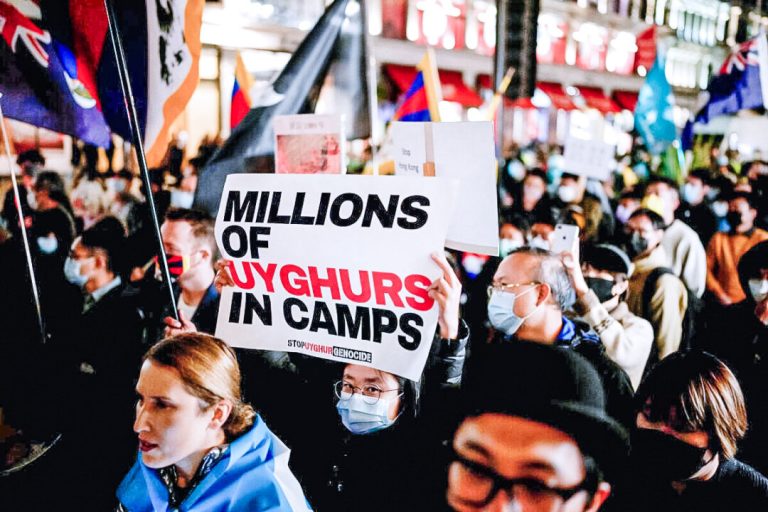
The Chinese Communist Party (CCP) is using its new “ethnic unity” law and the familial ties of the global Uyghur diaspora to escalate transnational repression, according to advocates and experts.
The regime is interrogating Uyghur Australians visiting the Xinjiang region—one of the few ethnic minority autonomous regions under Beijing’s rule—and pressuring them to collect information on diaspora communities back in Australia, according to an Aug. 16 Human Rights Watch (HRW) report.
“The Chinese government exploits the vulnerability of separated Uyghur families as an opportunity for surveillance and disruption of communities abroad,” wrote Philippe Bolopion, executive director at HRW.
Henryk Szadziewski, director of research at Uyghur Human Rights Project, told The Epoch Times that Beijing’s Ethnic Unity and Progress Promotion Law, combined with the transnational repression of Uyghurs and others through familial ties, represents “one of China’s boldest attempts to control the narrative” over the Xinjiang region.
The CCP enacted the Ethnic Unity and Progress Promotion Law on July 1, a move that critics
could further assimilate ethnic minorities and escalate the persecution of exiled dissidents.
Hung Pu-chao, associate executive director of the Center for Mainland China and Regional Development Research at Taiwan’s Tunghai University, told The Epoch Times that the regime is using these interrogations to expand its
.
“The Ethnic Unity and Progress Promotion Law names organizations and individuals abroad as subject to prosecution, giving China’s ethnic policy a clearer extraterritorial dimension,” Hung told The Epoch Times.
“While the regime cannot enforce laws globally, these illicit tactics combined with the new law have successfully exported a chilling effect across borders.”
HRW shared its findings with the Chinese and Australian governments.
“It is unacceptable for any foreign Government to target members of [the] community in ways that prevent individuals from exercising their fundamental rights and freedoms in Australia,” the Australian government stated.
Beijing has not responded.
Transnational Repression
HRW interviewed 11 Uyghur Australian citizens and permanent residents in Australia in April 2026 and May 2026, including recent visitors to the Xinjiang region and Australia-based activists.
While some faced interrogation, others were unable to travel to the Xinjiang region, reporting that they received no news of their relatives or spoke with them only under “strict official surveillance,” with Chinese officials monitoring their calls.
Ilshat H. Kokbore, a Uyghur political commentator based in the United States, is no stranger to such repression.
“My sister is still in jail in China. For our calls for freedom and human rights here, our relatives in East Turkestan are punished,” Kokbore told The Epoch Times, using the name pro-independence activists use for the Xinjiang region.

Ilshat Kokbore, research director at the Center for Uyghur Studies, speaks during the Tiananmen Square massacre candlelight vigil held at the Victims of Communism Memorial in Washington on June 4, 2026. Madalina Kilroy/The Epoch Times
The report shows that Beijing has continued its massive and systematic
against Uyghurs in the region, he said.
“The Chinese government tries to portray the policy in East Turkestan as a ‘progressive civilization,’ so they want some Uyghurs to come back,” Kokbore told The Epoch Times.
“At the same time, they want to use any Uyghur to divide the community, spread rumors, do their bidding to become their propagandist overseas.”
Human rights groups estimated that the regime has confined at least 1 million Muslims within a vast network of internment camps in the Xinjiang region. U.S. authorities have designated this repressive campaign as “
.”
Criminalizing Uyghur Identity
Hung said the report shows that Beijing is extending its reach beyond the Xinjiang region, subjecting Uyghurs to political pressure even while they live in democratic countries.
“As long as overseas Uyghurs maintain family and social ties to Xinjiang, Beijing can use those connections to exert influence over them,” he said.
“The routine controls imposed inside Xinjiang are linked to surveillance abroad, allowing Beijing to intrude into various aspects of Uyghurs’ lives.”

Chinese policemen push Uyghur women who are protesting at a street in Urumqi, the capital of the Xinjiang Uyghur autonomous region, China, on July 7, 2009. Guang Niu/Getty Images
Echoing Hung’s assessment, Kokbore warned that as diaspora communities in Western nations actively resist, Beijing is retaliating with borderless harassment while wielding the new “ethnic unity” law, criminalizing Uyghur identity outright.
“It proves even if they are Australian, American, or any European country’s citizens, China disregards it and harasses those Uyghurs, using all kinds of methods,” he said.
“And as the ‘unity’ law has become effective, they can use any excuse to prosecute any Uyghur who speaks Uyghur or practices Islam.”
Global Pushback
On July 31, Washington
43 Chinese companies to a trade blacklist over their alleged involvement in the regime’s human rights abuses in the Xinjiang region.
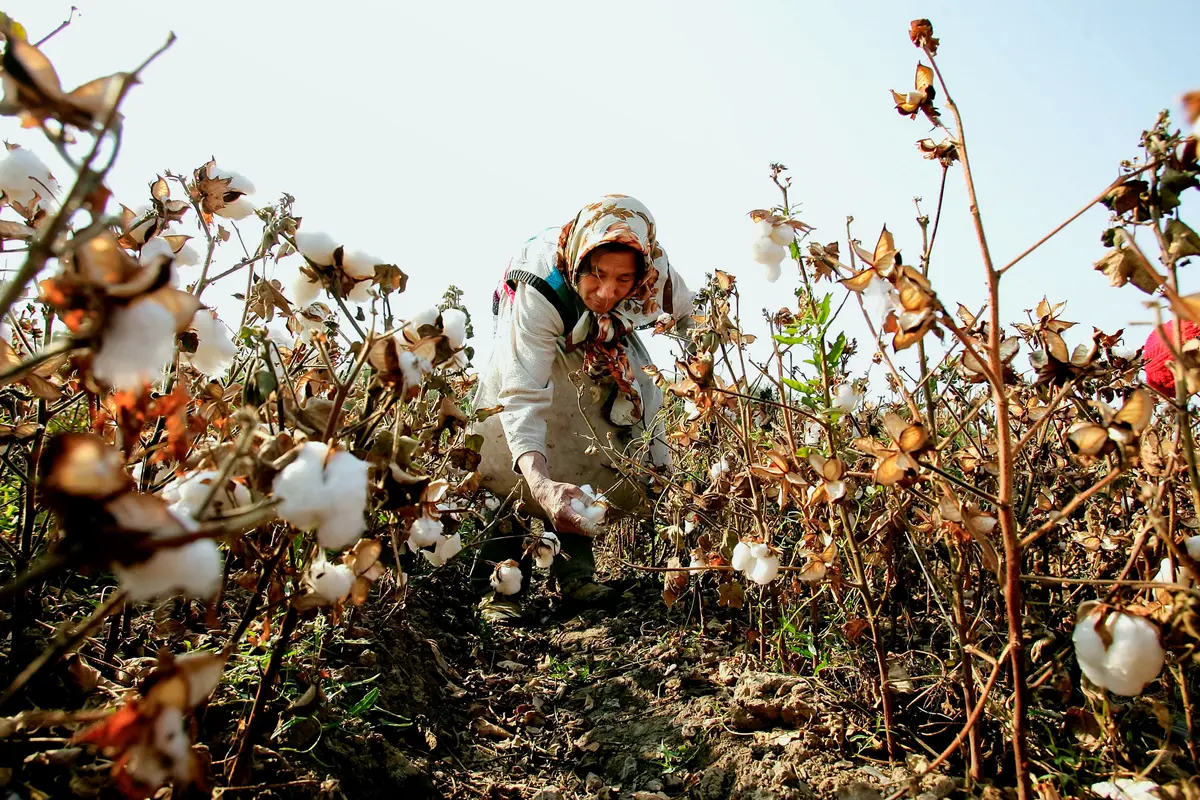
A migrant worker picks cotton in the fields in Shihezi, Xinjiang region, China, on Oct. 15, 2005. Guang Niu/Getty Images
Hung said that the sanctions alone will not force a policy reversal in the region but that they impose a heavier toll on Beijing for its repression.
“Beijing treats Xinjiang as a core national security issue,” he said. “A few rounds of sanctions will not alter its trajectory, but they still have a tangible impact.”
He said the CCP’s 2025 white paper explicitly outlines “anti-sanction” strategies, proving that global pushback has become an unavoidable pressure point for the regime.
“If China exports its political repression overseas, democracies must expand their responses to match,” Hung said.
“That means not just sanctioning Beijing, but protecting Uyghur communities within their own borders.”
Szadziewski concurred, saying that the trade restrictions are effective provided there is consistent global pressure on the regime.
“The protection of Americans, Australians, Canadians and citizens of other states who are Uyghurs should be a priority,” he said.