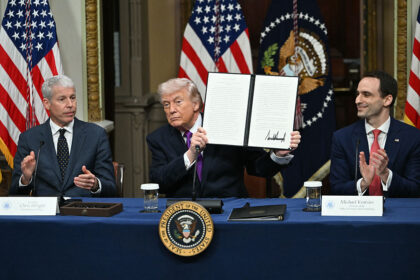
Recent events, such as U.S. President Donald Trump’s rapprochement with Russia’s Vladimir Putin and the heated U.S.-led dispute over Greenland, have prompted the question: what would happen if NATO were to collapse? The question of whether China would welcome the potential disintegration of NATO has been asked several times in recent days. This is a legitimate question, given Beijing’s long-term anti-NATO stance.
China views NATO as a remnant of the Cold War that should have been disbanded following the dissolution of the Warsaw Pact and the end of the bipolar world in the 1990s. Chinese experts have argued that NATO began looking for a new adversary after the Cold War to justify its existence. At the same time, NATO has transformed from a military alliance into a political one with global ambitions. Consequently, its focus shifted from collective defense to crisis management, leading to actions beyond the territory of its member states.
Furthermore, Chinese analysts claim that NATO and its allies are treated instrumentally by the United States and that it is Washington that has caused the alliance to act outside its treaty area in order to pursue U.S. goals, such as combatting terrorism in Afghanistan, Iraq, Libya and Syria. In this framing, divisions between the U.S. and other NATO members are often emphasized.
The Chinese narrative surrounding NATO has intensified in recent years, particularly since 2019, when China was mentioned for the first time in a NATO joint declaration following the leaders’ meeting in London. 2022 was a turning point in the intensification of China’s anti-NATO narrative.
First, since Russia’s invasion of Ukraine, both China and Russia have claimed that the West, the United States, and/or NATO are responsible for the conflict. They have argued that NATO’s expansion – namely Ukraine’s desire to join NATO, as well as the enlargement in Central and Eastern Europe in 1999 and 2004 – has made Russia feel insecure and forced it to launch the so-called “special military operation” in Ukraine.
In addition, the new NATO Strategic Concept, unveiled at the Madrid summit in June 2022, refers to China as a challenge to the Alliance. Finally, Beijing views the recent cooperation between NATO and the four Indo-Pacific countries (Japan, South Korea, Australia, and New Zealand) – including plans for a NATO liaison office in Japan, which have been criticized by Beijing, and freedom of navigation operations in the Asia-Pacific region by German, French, and British vessels – as evidence that NATO is expanding into Asia.
A good example of China’s deep distrust of NATO is its unwillingness to engage in dialogue with the alliance. Prior to Trump’s first term, regular China-NATO dialogues were held, focusing on issues such as Afghanistan. However, since 2017-18, when the United States pressured NATO to include China in its agenda, Beijing has been reluctant to maintain any meaningful contact with the alliance’s headquarters in Brussels. This has become particularly apparent since the adoption of the latest Strategic Concept.
This raises the question of whether the potential disintegration of NATO, due to Trump’s policy on Russia (such as his desire to reconcile with Putin) and the recent dispute within the alliance over the United States’ threats to take over Greenland (which is covered by the Washington Treaty), would be good for China. At first glance, given China’s anti-NATO stance, the answer would seem to be “yes.” However, the answer is not as straightforward as it seems.
The collapse of NATO would not be in China’s interests.
First, the dissolution of NATO would not put an end to U.S. pressure on China. As Beijing has emphasized, the United States is the dominant force within NATO. Chinese experts writing about NATO are well aware that the alliance’s focus on China is the result of U.S. pressure and that many other NATO allies are not very happy about it. This is also why NATO does not label China as a “threat,” but as a “challenge.” Using the term “threat” would require NATO to launch, for example, deterrence plans, and there is no appetite among European allies for this.
Second, despite Beijing’s anti-NATO narrative, the alliance appears to be effectively deterring Russia from initiating a broader war in Europe that would extend beyond Ukraine – and be contrary to China’s interests. Although the overarching strategic interest of the China-Russia partnership is to secure their totalitarian regimes by fighting democracy and freedom, primarily against the U.S., it is well known that relations between Beijing and Moscow are not without friction and distrust.
China really wants to avoid an expansion of Russia’s war of aggression in Europe, as it could have broader consequences, such as the closure of the European market. This market is needed to absorb China’s overproduction and overcapacities. There would also be a higher probability of Russia using nuclear weapons first. The conflict could also spill over into Asia, resulting in a third world war. Simply put, an expanded Russia-Europe war would not be in China’s interest – and NATO acts as the primary deterrent to Putin seeking to invade other European states.
The dissolution of NATO would give Russia a free hand to invade Central Europe, as there would be no NATO deterrent. In this hypothetical scenario, the United States would no longer have a military presence in Europe – it is reasonable to assume that NATO’s dissolution would result in the withdrawal of U.S. troops. In the case of Greenland, the European NATO members appear united in rejecting Trump’s plans to take over the island. Therefore, if Russia were to attack a European state, the other European allies would seem likely to respond militarily. In other words, even without NATO, a war between Russia and Europe could escalate into a worldwide conflict and a nuclear crisis could ensue.
In these circumstances, China, as Russia’s de facto ally, would come under huge pressure from Europe and possibly the United States to persuade Putin not to attack Central European countries and not to use nuclear weapons. There would also be domestic pressure on Xi Jinping. However, the outcome of this pressure would be uncertain, and China’s ability to act as a great power would be seriously tested.
It is worth noting that China’s vague slogans and concepts, as well as its extremely nebulous diplomatic language (including with regard to China’s desired global order), suggest that Beijing is reluctant to take responsibility for such a crucial global issue. This may be due to a lack of capacity, as well as leaders’ fear of taking responsibility, since failure could undermine their position in the Chinese political system.
In summary, NATO’s existence in its current shape is beneficial for China. Despite significant pressure from the United States, other allies are reluctant to pay excessive attention to China, bearing in mind the scope of the NATO Treaty and the fact that Russia poses the greatest military threat. In other words, the divisions within the alliance – particularly between the U.S. and the others – which have been clearly visible since the first Trump administration and continue to this day, work in China’s favor. NATO’s ability to prevent Russia from triggering a global catastrophe, such as nuclear war in Europe, also aligns with China’s interests.
Although the crisis over Greenland alarmed NATO as a whole, this may result in Europe finding another topic to discuss and cooperate with China on, in order to prevent Beijing from aligning more closely with Russia. It has been argued so far that there are at least three areas in which Europe could cooperate with China against Russia: the potential for a Russia-NATO war, the state of the Russian economy, and the presence of U.S. troops in Europe. Clearly, anti-NATO sentiment in China is less pronounced than in Russia. Perhaps it is time for Europe to exploit this fact.