The U.S. military has said it killed five suspected narco-terrorists in a strike on a drug-trafficking vessel in the Eastern Pacific on Oct. 27, the latest operation in a campaign against suspected cartel networks in the region.
U.S. Southern Command said Joint Task Force Western Hemisphere carried out a lethal, kinetic strike after intelligence confirmed that a go-fast vessel operating along established drug-trafficking routes was actively involved in narcotics trafficking.
“The operation killed five narco-terrorists,” Southern Command added.
Last year, Washington launched a new campaign of lethal strikes on suspected drug boats, dubbed Operation Southern Spear. During the past year, U.S. forces have claimed responsibility for at least 70 lethal strikes against suspected drug-trafficking boats in the Caribbean and Eastern Pacific, killing more than 200 people.
Alongside the military campaign, the United States has established the Americas Counter Cartel Coalition, bringing together 18 other Western Hemisphere nations to coordinate counter-trafficking efforts.
Defense and public security leaders from those countries met in the Dominican Republic on Oct. 26 and Oct. 27. Southern Command said in a post on X that Marine Gen. Francis L. Donovan was collaborating with ministers, defense chiefs, and security leaders to review and approve a campaign plan and a governance charter that outline the strategy and structure for the coalition.
Speaking during the meeting in Santo Domingo, Dominican Republic, Eric Geressy, senior adviser to the secretary of war for strategy, said Operation Southern Spear had significantly disrupted maritime trafficking networks over the past year.
“Operation Southern Spear proved what happens when partner nations mass combat power and achieve unity of effort,” Geressy said.
He said maritime trafficking corridors had fallen by 64 percent in the Western Caribbean, by 58 percent in the Eastern Caribbean, and by 40 percent across the Galápagos axis.
“We imposed catastrophic friction on their logistic lines. We shattered their command and control. Now the adversary is adapting,” he said.
Geressy described transnational cartels as “violent extremist organizations,” adding that they operate as “the al-Qaeda and ISIS of the Western Hemisphere.”
Last year, U.S. President Donald Trump signed an executive order directing his administration to designate several Latin American narcotics cartels as terrorist organizations.
A designation notice, published in the Federal Register on Feb. 20, 2025, includes groups such as the Sinaloa Cartel, the Jalisco New Generation Cartel, Venezuela’s Tren de Aragua, and El Salvador-based MS-13.
Rights Group Criticism
Human Rights Watch (HRW) has criticized the military campaign, arguing that the operations violate international law.
In an analysis published in September, HRW said the United States had carried out what it described as “extrajudicial killings” by using lethal force against suspected drug traffickers without demonstrating a lawful legal basis or identifying those killed.
The rights group called on the United States to end what it described as an unlawful campaign of killings at sea, investigate those responsible, and provide justice and reparations for victims.
It urged Congress to establish a special investigative committee to examine the strikes and recommended that the Justice Department investigate those who authorized and carried them out.
HRW said governments working with the United States on maritime drug interdiction should condemn the strikes and stop sharing intelligence that could support them. It added that those governments should consider whether continuing to cooperate could make them legally responsible under international law.
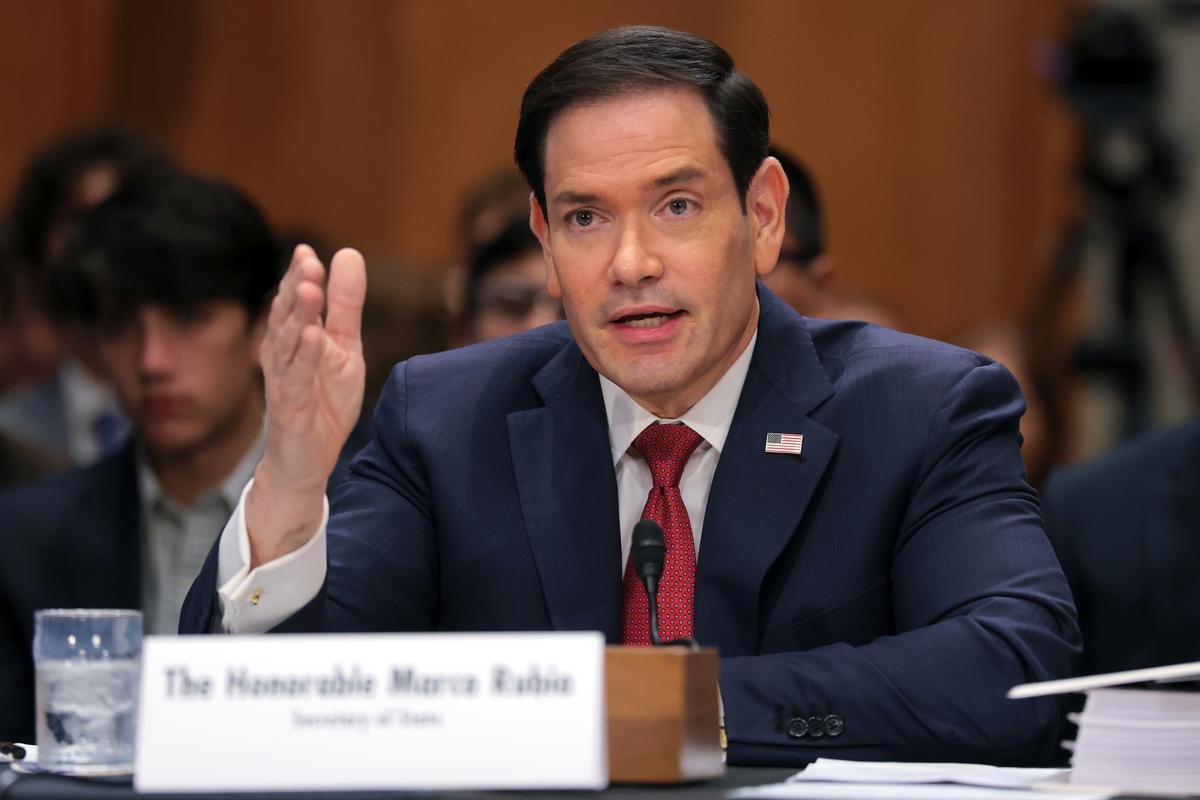
U.S. Secretary of State Marco Rubio testifies during a Senate Foreign Relations Committee hearing on June 2, 2026. Anna Moneymaker/Getty Images
U.S. officials have defended the campaign’s legality. During a Senate hearing in June, U.S. Secretary of State Marco Rubio said every strike undergoes a legal review.
Asked about the targeting criteria used in Operation Southern Spear, Rubio said each operation has “a legal officer on the deck” who determines whether a strike is lawful, adding that the process is carried out by the Department of War “the way it’s been done in other theaters around the world.”