On March 26, a Taipei court sentenced Taiwan People’s Party (TPP) founder Ko Wen-je to 17 years in prison in a corruption case that the TPP and Kuomintang (KMT) allege was politically motivated. The verdict, which also strips Ko of his civil rights for six years, will reshape Taiwanese politics ahead of this November’s island-wide local elections and the 2028 presidential race. The party that stands to gain the most from the shakeup is the KMT.
The ruling dealt a heavy blow to the TPP, a party built largely around Ko’s personality. Ko is now barred from running for president in 2028, and while he plans to appeal the verdict, that decision is unlikely to come in time for him to run. Legislator Huang Kuo-chang has led the TPP effectively since taking over as chair in January 2025, but he lacks the profile to mount a competitive presidential bid, and his run for mayor of New Taipei City remains a long shot.
While the TPP has shown impressive durability in a system that favors two-party contests, it lacks the financial resources of the main parties and has struggled to cultivate a deep bench capable of contesting top-tier offices. Its best hope now is to secure strategic gains in this November’s local elections and find a way to remain relevant in 2028.
The impact of Ko’s sentencing will take years to unfold. The TPP’s strong appeal among young voters has come at the expense of the ruling Democratic Progressive Party (DPP), which is traditionally favored by that demographic. If the TPP ultimately fails to survive this crisis, the DPP may benefit in the long run. But in the near term, the KMT has the most to gain.
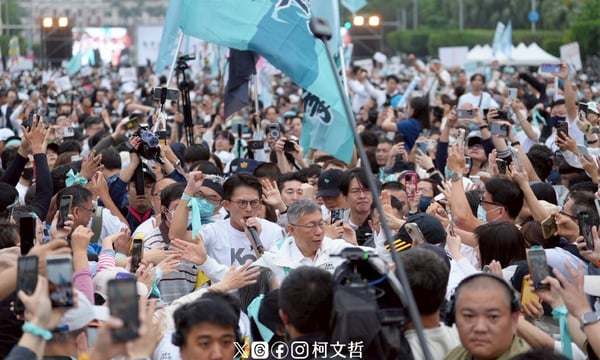
First, the widespread perception of political persecution, regardless of factual merit, reinforces opposition narratives casting the DPP and President Lai Ching-te as increasingly authoritarian. Ko capitalized on these sentiments in televised remarks after the verdict, addressing Lai by name and vowing not to “surrender.” A TPP-organized protest on March 29 drew tens of thousands of participants. Coming only months after a failed DPP-backed effort to recall two dozen KMT lawmakers – a move also criticized as politically motivated – the optics are particularly damaging. As the main opposition party, the KMT benefits from anything that undermines the ruling party’s image.
Second, this development is pushing the TPP more firmly into the KMT’s embrace. The TPP views itself as an independent bloc in the legislature and expresses willingness to work with the DPP on shared priorities. Many TPP figures and their supporters are more ideologically aligned with the DPP than the KMT. Just a decade ago, both Ko and Huang were DPP-aligned figures that enjoyed the party’s electoral backing. Their party’s growing alignment with the KMT is partly due to the DPP’s refusal to engage with it pragmatically.
While the KMT goes out of its way to court the TPP, the DPP’s dismissive rhetoric reinforces the party’s belief that it is being persecuted. With both opposition parties united in their desire to unseat the DPP, they have already agreed to cooperate in this November’s local elections, and their continued joint opposition to Lai’s agenda in the legislature seems assured.
Finally, unless Ko’s conviction is overturned in time for him to run in 2028, it will eliminate the biggest obstacle keeping the KMT from retaking the presidency. Lai won just 40 percent of the vote in 2024 and likely prevailed mainly because Ko split the opposition. It’s impossible to know precisely where Ko’s 26 percent share of the vote would have gone had he not entered the race. Some of his supporters have an ideological affinity with the DPP and likely would have voted for Lai. Others are equally disillusioned with both major parties and may have stayed home. But Lai’s weak showing and Taiwan’s large proportion of swing voters – who historically tend to punish ruling parties for failing to fix deep-seated socioeconomic issues – suggest that a significant share of Ko’s votes would have gone to the KMT candidate. There are reasons why, before Lai’s election, no ruling party had held the presidency for three consecutive terms.
Ko had planned to run again in 2028, and it’s unclear whether efforts to forge a joint KMT-TPP ticket would have fared better than in 2024, when an agreement collapsed weeks before the election. With Ko now sidelined, the KMT no longer needs to worry about a split opposition.
Shared enmity with the DPP also gives the KMT an opportunity to draw TPP voters into its camp by cooperating with the party in the election. In exchange for their cooperation, the TPP will hope to secure at least one senior role in the next administration. The KMT may offer Huang the vice presidential slot to encourage TPP supporters to back its ticket. However, Huang may prefer a Cabinet position such as premier. Though less secure, the premiership carries greater substantive authority. In either case, the promise of a significant post would help address the TPP’s relevance problem while also giving the party and its base a real stake in the KMT’s victory.
Of course, none of this is guaranteed. The KMT and TPP don’t fully trust each other, and the DPP likely still could win over ideological allies in the TPP, persuading some to join its campaigns. But nothing in the DPP’s previous interaction with the TPP indicates a tendency toward such pragmatism. Furthermore, significant defections appear unlikely, given the widespread perception of political persecution in the action against Ko and the KMT’s vocal support of the TPP compared with the DPP’s dismissive posture. As things stand, the KMT remains the most likely beneficiary of Ko’s conviction.