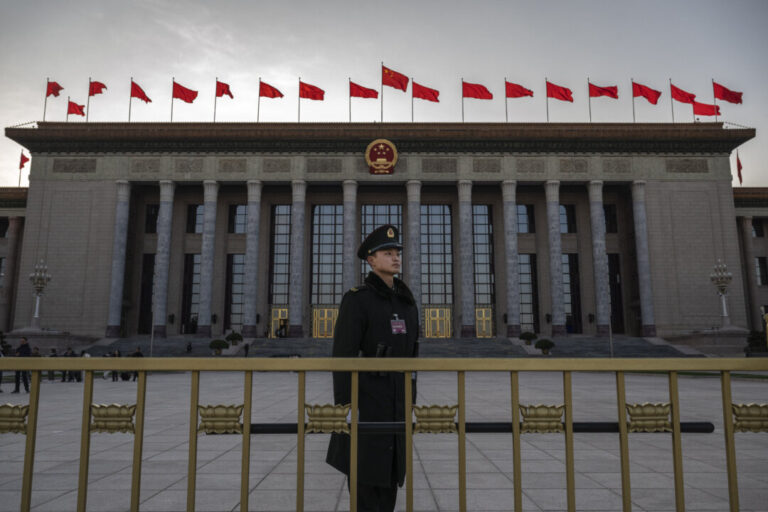
China analysts warn that Beijing could exploit a new law, passed at the regime’s recent Two Sessions annual political meeting, to assimilate ethnic minorities, intimidate Taiwan, and escalate transnational repression against exiled dissidents.
China’s National People’s Congress (NPC), a ceremonial rubber-stamp legislature, passed a law on March 12 stipulating that Mandarin—the country’s designated national common language—be used for education and teaching at all schools and educational institutions nationwide.
The NPC has never rejected an item on its agenda.
While Han Chinese comprise over 90 percent of China’s population, the 55 officially recognized minority ethnic groups possess millennia-old cultures, dialects, and languages.
The ruling Chinese Communist Party (CCP) framed the measure, titled the “Ethnic Unity and Progress Promotion Law,” as building “a basic understanding of the nation’s common language and script,” and pushed this instruction from preschool onward.
The law states that citizens’ learning and use of the nation’s common language and script “must not be obstructed by any organization or individual.”
It also stipulates that if minority languages and scripts are needed to issue documents in accordance with laws and regulations, “a version in the state’s common language and script shall be concurrently provided with the minority language version.”
“The state respects and protects the learning and use of minority languages and scripts,” the law stated, according to a translation.
The law also states that organizations and individuals outside China committing acts aimed at undermining “ethnic unity” or creating “ethnic division” will be held legally responsible.
It will take effect on July 1 this year.
‘Completely Assimilate Minorities’
Kelsang Gyaltsen, chairman of the Tibet Religious Foundation of His Holiness The Dalai Lama in Taiwan, said the legislation officially codifies Chinese leader Xi Jinping’s assimilationist ideology into a legally binding framework, even as it purports to protect the learning and the use of minority languages and scripts.
“Beijing will claim that these laws were thoroughly discussed with scholars, but they are actually state-sponsored academics who cannot represent the voices of the public or ethnic groups,” Gyaltsen told The Epoch Times.
Gyaltsen said the absence of explicit discriminatory language serves as a legal facade for the CCP’s long-standing targeting of native cultures, languages, and religions across several minority-populated regions.
For example, the Chinese regime has limited Tibetan children from speaking their native tongue by pushing boarding schools and preventing frequent home visits for years.
The U.S. Commission on International Religious Freedom, an independent federal commission, stated in its 2025 annual report that the regime has been committing “cultural genocide” against Tibetan Buddhists.
In Xinjiang, an autonomous region human rights watchers term East Turkestan, the regime has confined at least 1 million Uyghurs within a vast network of internment camps. The United States has designated this repressive campaign as “genocide.”
“Beijing has targeted the Uyghurs” specifically to cut them off “from the traditions that sustained their ancestors and defined who they are as a people,” Marco Rubio, then a U.S. senator and now secretary of state, said in a 2021 congressional hearing statement.
Gyaltsen said the new legislation serves as a formal endorsement of this broader coercive intent.
“What the CCP has done in these autonomous regions has already drawn years of sharp criticism from Western democracies, and after passing the law, Chinese officials in these regions will find it easier to intensify their suppression and use this legal basis to completely assimilate minorities,” Gyaltsen said.
Gyaltsen said that, unlike Hong Kong and Macau, which operate under their own Basic Laws, China’s five autonomous regions, such as Tibet, still lack specific directives for self-governance, allowing the Chinese communist regime to use this new legislation to tighten its grip on these territories.
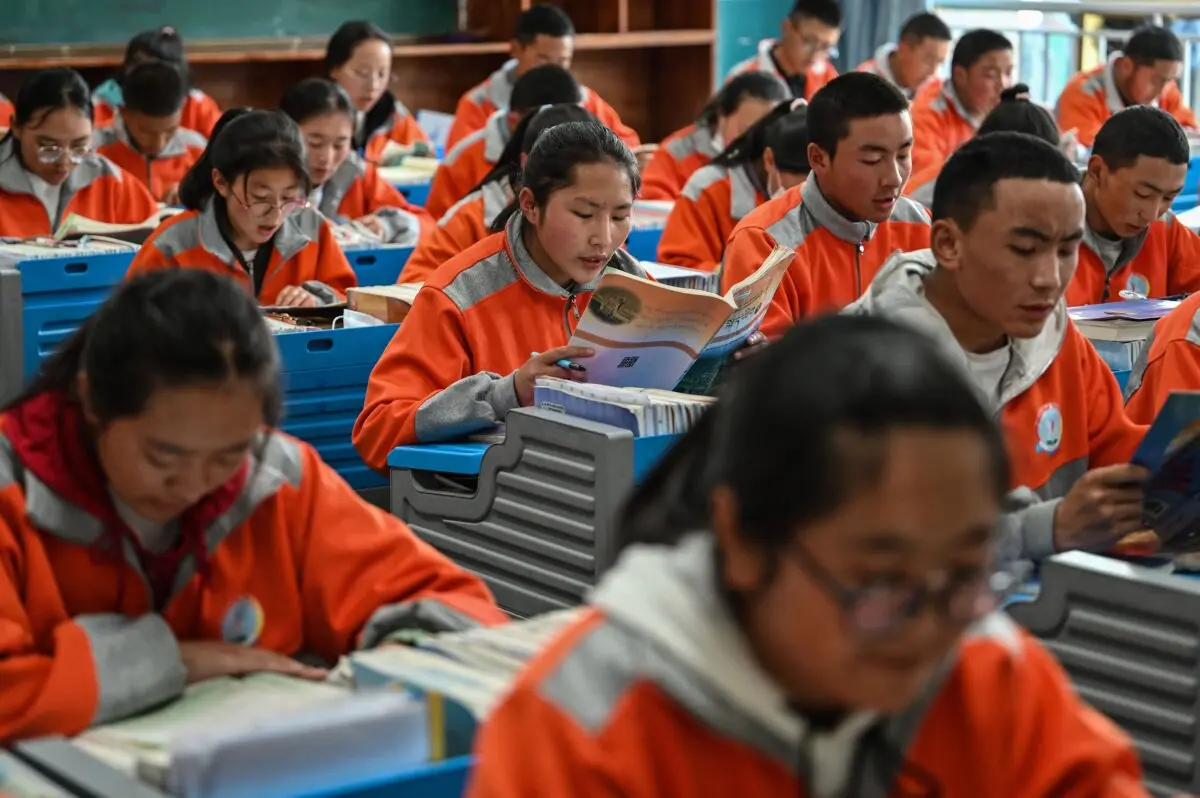
This photograph, taken during a regime-organized media tour, shows students in a classroom at the Lhasa Nagqu Second Senior High School in the regional capital Lhasa, Tibet, on June 1, 2021. Hector Retamal/AFP via Getty Images
“Since the passage of the Regional Ethnic Autonomy Law in the 1980s, no detailed autonomy regulations for these regions have ever been passed or promulgated, yet the CCP is now pushing this law to entirely control these populations,” he said.
Article 10 of the law reads, “Matters of ethnic unity and progress are not to be interfered with by foreign forces.”
“All acts using excuses such as ethnicity, religion, or human rights to insult and disparage, contain and suppress, or infiltrate and undermine the PRC are to be resolutely opposed.”
Threatening Taiwan’s Democracy
While focused on promoting ethnic unity, the law also extends its reach to Taiwan by mandating efforts to enhance “Taiwan compatriots’ sense of belonging, identification, and pride in the Chinese people,” and the sense of “being Chinese.”
Another stated provision is to uphold the “comprehensive leadership of the Chinese Communist Party, raise high the great banner of socialism with Chinese characteristics,” and “adhere to Marxism-Leninism, Mao Zedong thought, Deng Xiaoping theory.”
Taiwan is a self-governing democracy that the CCP has never ruled but constantly threatens to take by force. The Taiwanese government remains in a standoff with the CCP, as the Chinese civil war ended without a formal peace treaty or armistice. Open warfare ceased after the United States authorized defense of Taiwan with the signing of the 1954 Sino-American Mutual Defense Treaty and the 1955 Formosa Resolution.
The treaty was replaced by the Taiwan Relations Act of 1979.
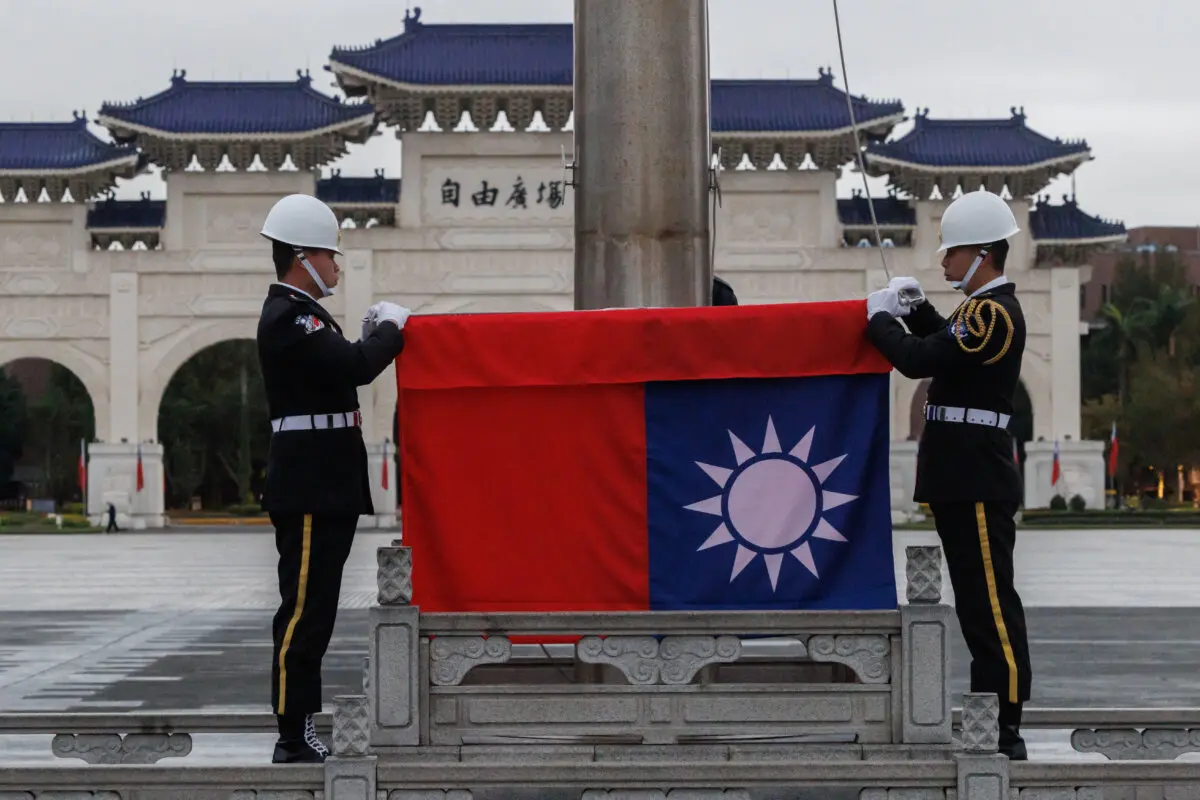
Taiwan’s national flag is raised during an early-morning ceremony in Taipei on Dec. 30, 2025. Cheng Yu-chen/AFP via Getty Images
The law has triggered great concern in Taiwan, as Liang Wen-chieh, deputy minister of Taiwan’s Mainland Affairs Council, said on March 12 that the legislation’s extraterritorial reach might directly target the island.
Liang cited the March 2023 detention of Li Yanhe—a Taiwan-based editor from Gusa Publishing—by Chinese national security authorities as an example, saying anyone interpreting history in ways disapproved of by the CCP faces legal consequences for inciting separatism.
“Our concern is that the terms in the law are vaguely defined and could implicate an extensive range of situations,” Liang told the reporters. “The CCP decides how the law should be interpreted and whether one contravenes the law, which applies not only to Chinese nationals, but also to historians, writers, and religious leaders in other countries.”
Echoing Liang’s assessment, Ilshat H. Kokbore, a Uyghur political commentator, said China will undoubtedly use the new legislation to suppress Taiwan.
“Because Beijing actively marginalizes Taiwan on the global stage while threatening military annexation, the CCP will weaponize any such laws to threaten the island’s democratic system,” Kokbore told The Epoch Times.
Kokbore said Beijing could exploit the measure to penalize pro-Taiwan advocacy and silence sectors promoting the island’s sovereignty.
“The broadly worded provisions of this law allow for unlimited political expansion, meaning China will use it to crack down on Taiwan’s publishing industry and news media that emphasize a distinct Taiwanese identity,” Kokbore said.
Gyaltsen said the legislation establishes a worldwide trap for Taiwanese citizens that allows the regime to prosecute past political expression upon their entry into territory under its control.
“This is extremely perilous for Taiwanese people because any past efforts to support the island’s future, regardless of location, could be used as evidence to arrest them when traveling to China for business or other activities,” Gyaltsen said.
Silencing Exiled Voices
Kokbore said the legislation criminalizes any behavior deemed detrimental to “ethnic unity,” giving the regime legal grounds for transnational repression against exiled activists.
“Even though I am a United States citizen, Beijing can claim that my advocacy for Uyghur and East Turkestan independence violates the law and penalize me because of my birthplace,” Kokbore said.
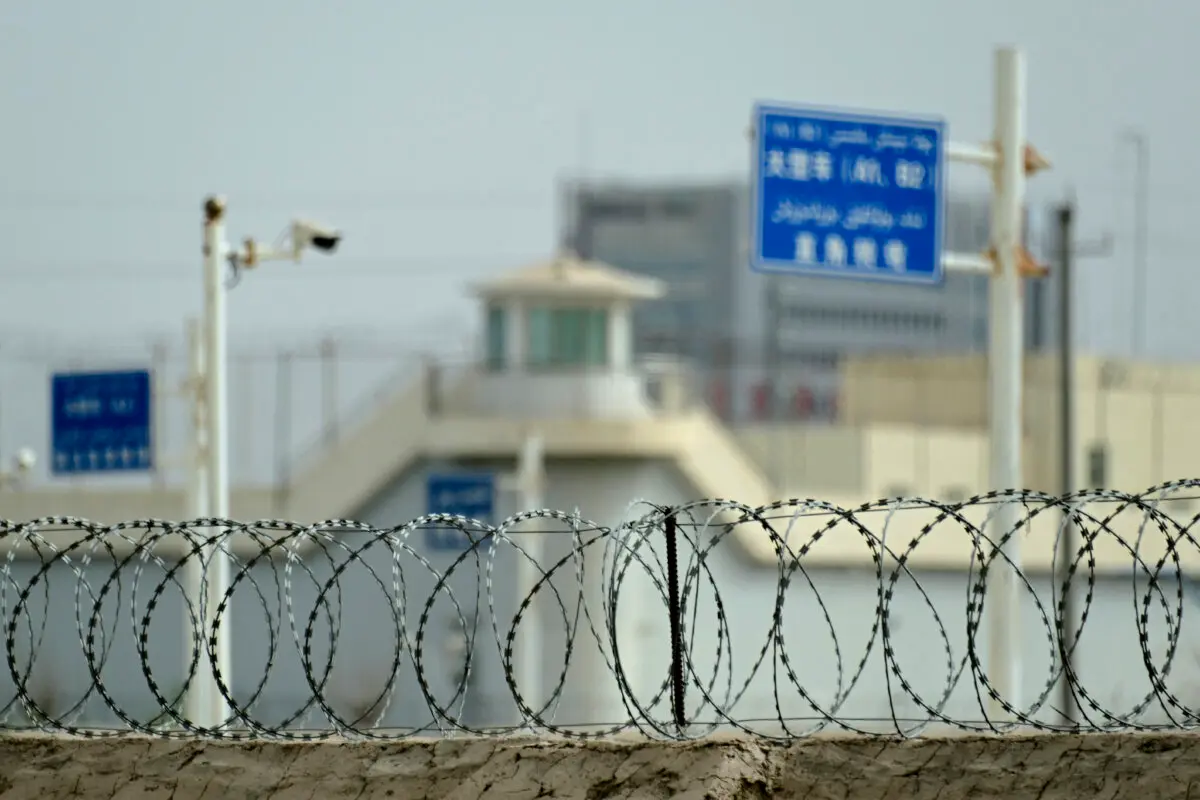
An alleged detention facility in the northwestern Xinjiang region, China, on July 19, 2023. Pedro Pardo/AFP via Getty Images
Gyaltsen said the regime might target ethnic minorities simply for learning their native languages outside China, even if they do not overtly advocate for autonomy or independence rights.
“People living in exile might not take to the streets to protest, as they could just be teaching Tibetan in their host countries, but the CCP could potentially use the law to criminalize them in the future,” Gyaltsen said.
Gyaltsen said strong Western pushback has temporarily deterred the CCP from making blatant cross-border arrests via secret police stations operating on foreign soil, forcing the regime to instead rely on threatening the China-based relatives of dissidents.
“If individuals living outside China protest against Chinese mining activities in Tibet, Beijing will use this law to target their family members back home with imprisonment under fabricated charges like ‘inciting subversion’ or ‘separating the motherland,’” Gyaltsen said.
“The Chinese government is forcing this legislation to eliminate any safe haven for dissidents, creating an extremely dangerous situation for diaspora communities.”