During the recent conflict between the United States and Iran, China indirectly assisted the latter. Chinese companies and entities sent Iran chipmaking tools, provided satellite imagery of American forces in Saudi Arabia, allowed Iran to acquire a spy satellite used to capture images of U.S. air bases in Saudi Arabia, Kuwait, and Jordan, and provided Iran with a material used for missile propellants.
Such support to Iran stemmed more from China’s interest in containing the U.S. in West Asia than from the China-Iran relationship itself.
China and Iran benefit enormously from their relationship. First, close relations yield significant material benefits. China is Iran’s largest trading partner and purchases around 90 percent of its oil. Because of international sanctions, Iran is unusually dependent on China for technology transfers and on its financial networks.
Second, China and Iran also share the goal of undermining the global order led by the United States. Both countries value their ancient “Silk Road” relationship and sympathize with efforts to push back against perceived American hegemony. They want to operate freely in their respective regions, while also keeping the United States and other third parties out of what they perceive as their spheres of influence. Along with Russia, they are Eurasian land powers that want to keep other powers, extraneous to their landmass, at bay.
Yet there is also only so much that China and Iran are willing to do for each other. China only provided platitude-laden diplomatic backing for Iran and continued to pursue friendly relations with Iran’s Gulf Arab rivals. China does not support a long-term closure of the Strait of Hormuz, as this would conflict with its own economic interests. Iran, whose modern society has generally been more oriented toward the West than to China, is also motivated to improve political and economic relations with the West rather than to always side with China. This is because Iran has realized that China is not willing to go out on a limb for Iran by taking its side at international forums or preventing sanctions, and may, in fact, prefer an isolated Iran to be dependent on it. Ultimately, China’s highest strategic goal is maintaining calm with the United States, even if this disadvantages Iran.
This friendly but distant relationship has been a characteristic of Sino-Iranian ties since ancient times. They have consistently found each other to be useful, yet they haven’t invested strongly in their partnership.
Chinese and Iranian empires have generally been on cordial terms. There was enough geographic distance between China and Iran, so their spheres of influence barely overlapped. Nor were they direct threats to each other, separated as they were by a number of city-states and steppe empires. But while they were close enough to one another to interact, due to their distance, China and Iran belonged to different geopolitical worlds that precluded overtly close and friendly relations.
The relationship, at the state level, between China and Iran is one of the oldest in history. Sinic and Iranian polities with roughly similar shapes and identities have existed and interacted with each other since the Han dynasty and the Parthian Empire exchanged embassies around 106 BCE, after a Chinese expedition journeyed to Central Asia and heard about the Parthian Empire to the west.
The Parthian and Han empires exchanged a few more embassies and gifts, demonstrating that their states remained in occasional but not frequent contact, and that this contact did not extend to political support. However, trade between ancient China and Iran was significant, and extended through much of the Muslim period. Persian merchants journeyed overland and via maritime routes to Chinese ports, such as Guangzhou, and carried on a trade in luxury goods. Meanwhile, tea, paper, and other Chinese goods found their way to Iran. Iranians also played a role in the transmission of Manicheanism, Buddhism, and Nestorian Christianity to China.
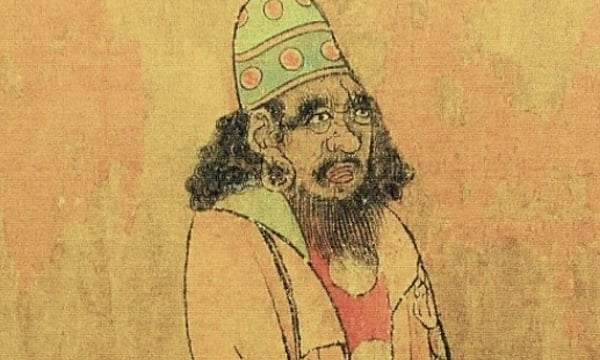
There were two particularly notable periods of close Sino-Iranian relations in ancient and medieval times. The first was during the Sasanian Empire (224-651 CE), which sent several embassies to China and may have even coordinated with Chinese dynasties against a number of steppe empires. During the Arab conquest of Iran, Peroz III, the son of the last Sasanian Persian emperor, sought Chinese help, was installed as the Chinese-backed Governor of Persia in Sistan, and eventually fled to China, where he became a general, while his son would live out his years at the Tang court. This demonstrates that China was familiar and friendly enough for a deposed Persian emperor to seek out its help and eventually settle there. On the other hand, Chinese forces quickly withdrew from Iran and, later, from Central Asia after being defeated by the Arabs at the Battle of Talas in 751 CE. The Chinese saw these lands as being too distant for permanent military involvement. At one point in this process of disengagement with West and Central Asia, Chinese forces abandoned Peroz III at Suyab, in present-day Kyrgyzstan. He had to find his way back to China.
Iran and China also briefly became closely intertwined during the Mongol era in the 13th century CE, when both regions became part of the Mongol Empire. Chinggis Khan himself conquered most of northern China from the Jin and Xi Xia dynasties and present-day Iran from the Khwarezemian Empire. His grandchildren, the brothers Hulegu and Kublai, founded the Ilkhanate and Yuan dynasty in Iran and China, respectively. Hulegu recognized his elder brother Kublai as Great Khan, so for a time, both Iran and China were theoretically united in one polity. A great number of Persians entered China in Mongol service at this time, as the Mongols preferred to use Muslim administrators over Chinese ones. In the other direction, Chinese influence played a significant role in the development of Persian miniature painting, wherein human figures tend to look distinctively Chinese rather than Persian.
However, the unity of the Mongol Empire was soon broken when the Mongol khanates went their separate ways. China and Iran were pulled apart after the Ilkhanate disintegrated in 1335 CE and the Yuan dynasty collapsed and was succeeded by the Han Chinese Ming dynasty in 1368 CE.
Yet again, distance and divergent interests pulled the Iranian and Chinese worlds apart, while trade and occasional political interactions, dictated above all by pragmatic concerns, continued, a pattern that continued into the 21st century and can be seen today.