China has imposed sanctions on two Polish entities linked to the country’s defense and high-tech sectors. The move comes in response to the European Union’s 21st sanctions package against Russia. The latest EU measures targeted several companies from China and Hong Kong that are accused of supplying Moscow with technologies and components used in Russia’s war against Ukraine.
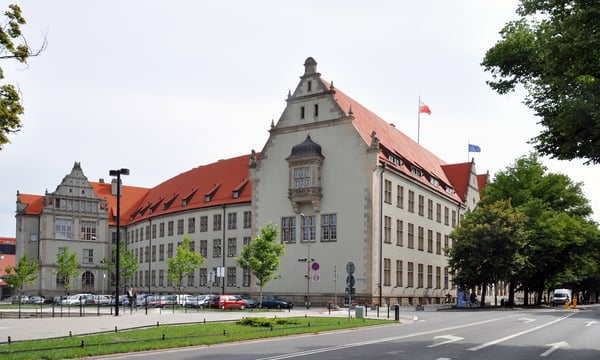
One of the Polish entities placed on China’s export control list is Wrocław University of Science and Technology (WUST), one of Poland’s leading technical universities with recognized expertise in satellite technologies, and space-related research. The other is Vigo Photonics, a high-tech manufacturer supplying components for the Polish Armed Forces as well as the Military University of Technology, Poland’s premier institution for military engineering.
This is not Beijing’s first move of this kind. In April, China’s Ministry of Commerce added seven European entities to its export control list in response to European measures targeting Chinese companies.
Responding to questions from the Polish Press Agency on July 27, Chinese Foreign Ministry spokesperson Lin Jian emphasized that the decision was “a response to the EU’s erroneous move of listing and sanctioning Chinese companies” and stressed that “the measures do not target any specific country.”
Beijing’s decision to sanction WUST is particularly striking. The university participates in EU-funded projects on military drones and battlefield artificial intelligence. At the same time, it has been engaged in joint semiconductor research with Chinese universities.
“Wrocław University of Science and Technology is a poli-technical school with tradition and impact for regional and domestic Polish industry,” Krzysztof Karwowski, a researcher at the SGH Warsaw School of Economics, told The Diplomat.
“It is a leader primarily in advanced photonics and is the longest-established research center in this field in Poland, creates a number of engineering partnerships in Europe, and is the core of the Polish space industry: microsatellites and satellite optics for security.”
As for the implications of China’s move, Karwowski said it was “difficult to assess” at this point – “we will know them in the coming weeks.”
He pointed out that WUST and Shanghai Jiao Tong University sealed a “partnership in the field of design and research on semiconductors” last year. “Given China’s activity at Polish academia, WUST may re-prioritize its collaborations in Asia, of which it has a number, to universities in India, Japan, or Korea,” Karwowski predicted.
The university’s inclusion on the sanctions list is puzzling, given its close scientific cooperation with Chinese institutions.
The other sanctioned entity, Vigo Photonics, specializes in manufacturing infrared detectors, building on research developed in cooperation with institutions such as the Military University of Technology. The company’s products are used across the energy, medical, railway, and defense sectors.
For the Polish Armed Forces, Vigo supplies infrared detectors used in unmanned aerial vehicles, precision-guided munitions, and self-guided weapons. Its components are also integrated into observation and targeting systems installed on armored vehicles and air-defense systems acquired by the Polish military.
Interestingly, the company itself had anticipated the possibility of Chinese restrictions. According to Vigo’s public statement:
Aware of this risk, the company has for several years sourced these substrates primarily from suppliers in Japan and Europe, capable of covering its full demand. The company also maintains inventory sufficient for more than one year of production, ensuring continuity in manufacturing infrared detectors and modules.
Importantly, inclusion on China’s export control list does not automatically prohibit all trade. Under Chinese regulations, entities such as Vigo Photonics and Wrocław University of Science and Technology may still receive dual-use goods from China, provided exporters obtain the appropriate government license. In practice, this means Beijing retains discretion over future deliveries rather than imposing an outright embargo.
Beijing has offered no explanation for why these particular Polish entities were selected. While it is tempting to construct a broader geopolitical narrative, several recent developments are worth noting.
First, WUST is located only around 20 kilometers from the site of the recently announced Polish-Taiwanese Foxconn investment. Just weeks ago, Polish and Taiwanese officials unveiled plans for Taiwan to help revive two major industrial projects in Poland: an electric vehicle factory originally expected to be developed with Chinese partners, and a semiconductor project left behind after Intel abandoned its investment near Wrocław.
Second, the sanctions coincide with Poland’s growing role in Europe’s space sector. Two weeks ago, the European Space Agency announced that a new ESA Center for Civil Security and Resilience will be established in Warsaw, supporting the development of European capabilities in strategically important fields. Space technologies remain one of the fastest-growing arenas of geopolitical competition between China and Western countries, and as Karwowski noted, WUST is central to Poland’s space program.
Third, Beijing may also be responding to Poland’s increasingly visible political engagement with Taiwan. Earlier this month, former Polish Prime Minister Beata Szydło led a delegation of Members of the European Parliament from the European Conservatives and Reformists (ECR) group to Taiwan, where they met President Lai Ching-te and senior representatives of Taiwan’s government and business community.
In crafting its latest sanctions, China may have chosen Polish institutions that are important enough to send a political message, but not so important that they would seriously damage scientific or business cooperation. In this sense, the sanctions appear to be more of a political signal than an attempt to cause major economic harm.