Official preliminary results from Israel’s election showed no clear winner on Oct. 29, leaving caretaker Prime Minister Benjamin Netanyahu facing another round of difficult coalition negotiations, after his Likud Party fell well short of a parliamentary majority.
Israelis voted on Oct. 27 to elect the country’s 26th parliament, known as the Knesset, with voter turnout reaching about 77.7 percent, the highest turnout rate in more than two decades.
To form a government, a party or coalition must secure the support of at least 61 members in the 120-seat Knesset.
Official preliminary results released on the morning of Oct. 29 showed that Netanyahu’s Likud Party remained the largest, with 20.56 percent of the vote, but well short of a parliamentary majority.
Israel elects lawmakers through a nationwide system of proportional representation, meaning that governments are often formed through coalitions rather than by a single party.
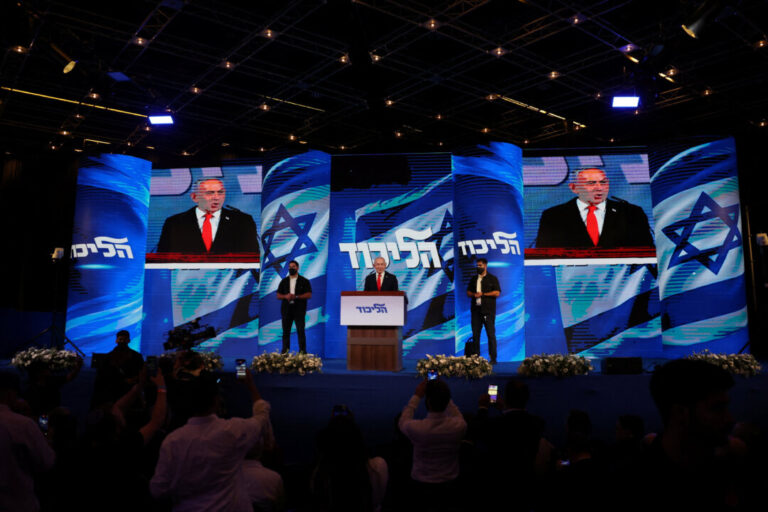
Addressing supporters after the vote, Netanyahu said Israel must form “a strong, national, right-wing government” and warned against any coalition relying on what he described as “anti-Zionist Arab parties.”
Netanyahu’s main rival, former military chief Gadi Eisenkot, and his Straight Up alliance came second with 16.09 percent of the vote, ahead of former Prime Minister Naftali Bennett’s Together Party on 9.24 percent, fragmenting the anti-Netanyahu camp.
The combined support for the Arab parties Joint List and Ra’am stood at about 15 percent, giving them one of their strongest showings in years.
Joint List leader Yousef Jabareen said after the vote that his alliance was prepared to help replace Netanyahu’s government.
“The change comes through Jewish-Arab partnership,” he said in an Oct. 28 post on X.
The preliminary results suggested that neither bloc was assured of the 61 seats needed to govern, pointing to potentially difficult coalition negotiations.
Fraud Allegations
The preliminary results come in amid allegations of election fraud and suspected foreign interference.
Netanyahu alleged on Oct. 28 that Arab parties were involved in widespread election offenses, including bribery, intimidation, violence, forged ballots, and the use of prohibited software to mobilize voters.
In a statement, Netanyahu said Likud was submitting evidence to police, the Shin Bet domestic security agency, and the Central Elections Committee. He called for a full criminal investigation into what he described as election theft.
In a subsequent statement, Netanyahu referred to what he called the “Ra‘amgate affair,” alleging that foreign entities had attempted to influence the election and arguing that no Zionist party should cooperate with Ra’am or the Joint List while investigations were pending.
The Epoch Times reached out to Ra’am and the Joint List for comment but did not receive a response by publication time.

A road sign stands in front of a large billboard featuring Israeli Prime Minister Benjamin Netanyahu (R) of the Likud Party and former military chief and Yashar Party leader Gadi Eisenkot, in Ramat Gan, Tel Aviv, on Oct. 20, 2026. Jack Guez/AFP via Getty Images
Chair of the Central Elections Committee, Justice Noam Solberg, on Oct. 28 instructed Shin Bet chief David Zini to investigate what he described as serious suspicions that foreign actors had sought to influence the election through foreign funding.
In a formal letter, Solberg said allegations had been brought to his attention involving external actors operating against Israel’s interests.
Although he said he could not verify the allegations, Solberg wrote that they warranted a thorough investigation to safeguard the integrity of the election.
He asked the Shin Bet to use its powers to gather evidence either substantiating or disproving the allegations and requested any findings within a week because of the legal deadlines for filing election appeals.
Eisenkot said on Oct. 29 that authorities should thoroughly investigate any allegations of foreign interference but warned against allowing political actors to use the situation to delay the inauguration of the new Knesset.
“The State of Israel must guard the purity of the elections with utmost vigilance against any attempt at interference,” he said, while urging that every complaint be investigated.
The election was Israel’s first since the Hamas terrorist group’s Oct. 7, 2023, attack on Israel, after which Israel fought wars in the Gaza Strip, Lebanon, and Iran, conflicts that have reshaped the country’s political landscape.