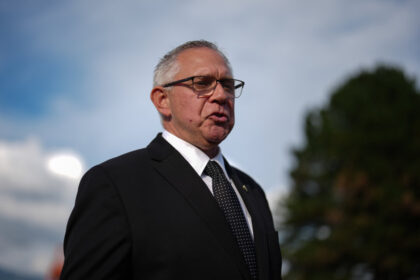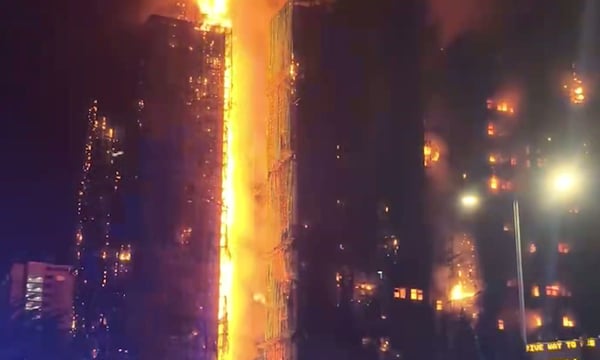
When Hong Kong Chief Executive John Lee announced the resignation of Housing Secretary Winnie Ho over the Wang Fuk Court fire, a bereaved family member questioned why only one minister had been made to bear political responsibility. Yip Ka-kui, who lost his wife in the disaster, described the government’s approach as accountability calculated with nanometer precision. “All the secretaries for the departments named should step down,” he said.
When there is credit to claim, Yip observed, ministers take their share. When things go wrong, the responsibility falls on those working beneath them.
His criticism exposed a fundamental problem with Hong Kong’s response to the fire that killed 168 people in November 2025. Eleven months after the tragedy, the government has offered apologies, a ministerial resignation, investigations into dozens of civil servants, and extensive proposals for bureaucratic reform. Yet the authority to determine who should be held politically responsible, and what consequences they should face, remains firmly in the hands of the government itself.
The independent committee’s findings were unequivocal. Residents had raised “numerous complaints and enquiries about fire safety concerns at Wang Fuk Court,” while government departments neglected warnings, failed to exercise “real supervision,” and allowed dangerous construction practices – like “the extensive use of foam boards to cover all windows” – to continue. The report identified serious regulatory failures involving the Housing Bureau’s Independent Checking Unit (ICU), the Buildings Department, the Fire Services Department, and the Labor Department.
In explaining Ho’s resignation, Lee pointed to the Housing Bureau’s oversight of the ICU, while stressing that she had committed no personal wrongdoing. He described Ho’s departure as his political decision, made after considering departmental responsibilities and other factors. Yet he provided no clear standard explaining why failures within the Housing Bureau warranted its minister’s resignation, while those involving other departments did not produce equivalent consequences.
Development Secretary Bernadette Linn, whose bureau oversees the Buildings Department, acknowledged having considered resigning. She nevertheless compared the chief executive to the captain of a ship, explaining that, as a member of his “crew,” she was obliged to follow his instructions. Labor and Welfare Secretary Chris Sun similarly stressed that politically appointed officials must answer to the chief executive, maintain team spirit, and demonstrate an awareness of the broader interests of the administration. He would remain in office as instructed.
In other words, Ho left because Lee determined that she should assume political responsibility. Other ministers remained because Lee instructed them to continue their work. In both cases, the chief executive determined the outcome, while the public was left to accept or criticize his judgment. Without consistent and public standards, a ministerial resignation becomes a political concession granted at the discretion of the chief executive.
The independent committee itself was appointed by Lee and reported its findings to him. Despite extensive public hearings and detailed findings, it remained a non-statutory body without compulsory evidence-gathering powers. Its recommendations have been returned to the same executive authority responsible for determining their implementation and the political consequences for officials.
This concentration of discretion is particularly consequential in Hong Kong, where the chief executive is selected by a 1,500-member Election Committee rather than through universal suffrage. Only 20 of the Legislative Council’s 90 seats are directly elected, with candidates subject to political eligibility screening. Citizens consequently have limited electoral means to impose political consequences if they disapprove of the way an administration has handled a disaster.
Public pressure is limited in other ways as well. Shortly after the fire, student Miles Kwan was detained by police after distributing material demanding an independent investigation and government accountability. His detention illustrated the risks surrounding collective mobilization over the disaster. Without meaningful electoral leverage and with constraints on public organizing, citizens have few effective means to challenge the political settlement announced by the administration.
Against this background, the response from Beijing’s Liaison Office is revealing. Following the publication of the committee’s report, the office praised Lee’s leadership and described the government’s apologies, investigations, and reforms as evidence of a “a responsible government that is willing to take ownership and commit to reform.” It commended the administration’s “firm resolve to rectify long-standing, deep-rooted problems” before urging Hong Kong society to “unite and look to the future” under Lee’s leadership. The statement even explicitly connected the response to Hong Kong’s first five-year plan and the broader goal of advancing the city’s “high-quality development.”
In the Liaison Office’s framing, a report exposing pervasive failures in government supervision became an occasion to celebrate the administration’s capacity for self-correction. The announced measures were presented as evidence of responsible leadership, while the public was encouraged to recognize the government’s efforts and turn its attention toward future development.
The emphasis on moving forward was already apparent in the government’s handling of displaced homeowners. Months before the independent committee completed its investigation, the administration introduced a scheme to acquire property titles at Wang Fuk Court. Owners were given until August 31 to accept the offer, with most required to execute sale agreements by October 15. Both deadlines preceded the publication of the committee’s findings on October 29.
The scheme offered urgently needed financial and housing arrangements to families who had lost their homes. Yet residents faced consequential decisions about surrendering their property rights while the full circumstances of the disaster remained under investigation. Some expressed concerns about the deadlines and their limited room to negotiate, particularly given the uncertainty surrounding alternatives to the government offer.
By early September, more than 99 percent of homeowners had indicated their willingness to sell. The government could point to this overwhelming response as progress in resolving the housing crisis created by the fire. But acceptance of a property acquisition offer says little about whether residents are satisfied with the government’s handling of the disaster. Families facing displacement and financial uncertainty have immediate needs that cannot be postponed until every question of responsibility has been answered.
The property acquisition process and the political accountability exercise share an important feature: the government largely determines the available options, the timetable, and the conditions under which decisions are made. Residents must navigate those arrangements while possessing limited influence over the broader political decisions that shape their futures.
The government’s 11-month investigation, criminal proceedings, and proposed reforms demonstrate its administrative capacity to respond to a major disaster. Whether these measures will prevent another tragedy remains to be seen. What the official response already reveals, however, is a political system in which accountability is largely defined and administered by the executive rather than enforced through public participation and democratic control.
For the bereaved families, the central questions remain unanswered. Why were residents’ repeated warnings ignored? Why was political responsibility assigned to one minister while others remained in office? What can citizens do when they consider the government’s answers inadequate?
Political accountability requires more than the willingness of those in power to acknowledge mistakes and impose consequences of their choosing. It depends on the ability of the public to demand explanations, challenge official decisions, and exercise influence over those who govern them.
In Hong Kong, the chief executive can decide which officials should resign, which should remain, and when the administration should move forward. The people who suffered the consequences of its failures have few options to demand a different outcome. That imbalance lies at the heart of Hong Kong’s accountability problem, and no amount of official contrition or administrative reform can resolve it on its own.