When the United States and Israel launched their first missile strikes against Iran on February 28, the reaction world-wide was shock. The White House had managed not to leak. The press was oblivious. And Iran itself was caught completely off guard, with Supreme Leader Ali Khamenei killed in the first strikes.
It is difficult to imagine that any country was more disconcerted than China. They had miscalculated the American intention on Iran, on a gargantuan level. China should have read the tea leaves. The United states had already neutralized Iran’s nuclear sites with a spectacular bombing raid on June 21, 2025 that decimated the facilities and set Iran’s nuclear bomb development back by years. Venezuela, as well, should have been an example. Despite having heard U.S. President Donald Trump issue numerous warnings to Venezuela not to allow illegal drugs to be shipped to the United States, then-President Nicolas Maduro ignored the messages. Maduro was ultimately captured by U.S. forces and now sits in a New York City jail awaiting trial.
China – like the rest of the world – was caught off-guard by the Israeli-U.S. strikes and the resulting conflict. Beijing’s challenge now is to steer China’s economy around the repercussions – and that challenge is formidable.
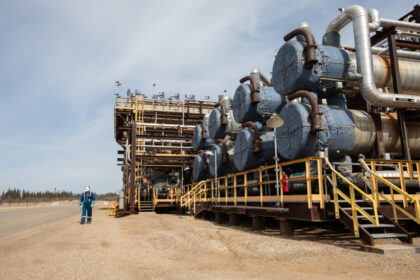
Indeed, China’s already stumbling economy is finding its decline exacerbated as the global cost of the Iran-U.S. war continues. China has been in a state of deflation for more than three years. With deflation comes a loss of resilience, the exact quality that the Chinese economy needs right now in order to ward off the global energy shock. Iran is allowing only limited shipments through the Strait of Hormuz, a major artery for the world’s gas and oil – including China’s.
There are those, however, who see opportunities amid the current economic situation in China.
Dr. Zhang Chuchu of Fudan University in Shanghai suggested that the conflict positions China to “reshape” economic cooperation with North Africa, also known as the Maghreb. In a paper in mid-March, Zhang wrote, “While global attention during the U.S.-Israeli war with Iran has centered on its direct effects on U.S.-China tensions or Beijing’s ties with Gulf capitals, a quieter yet strategically significant realignment has been unfolding across North Africa.”
Zhang stressed that China, which is the largest crude oil importer in the world, has faced “challenges” arising from the closure of the Strait of Hormuz, through which 40-50 percent of its imports by sea generally travel. With Hormuz blocked off by Iran, Zhang argued, Beijing has turned to a “dual-track strategy of multi-source procurement and accelerated green transformation.”
Of course, shipping to and from China is not completely shut down. Container shipping from China’s East coast, such as Shanghai and Ningbo ports, to the Western Hemisphere – such as the West coast of the United States, in particular Los Angeles – is unaffected logistically by the chokehold on Hormuz. In some sectors of the economy, and along some of China’s critical import and export routes, China is relatively protected from the trade shocks that are being generated by the military action occurring in the Middle East.
China’s cost may prove to be lower than some of the other at-risk economies of the world. Beijing has prepared for limited oil disruptions, having stockpiled (some might say hoarded) enough oil to cover demand for at least four months should it prove necessary.
Oil is China’s greatest vulnerability. A stable, reliable, and low-cost source of oil is critical for China’s overall economic health, and Beijing knows it. It built up the massive oil reserves in the case of just such a crisis – although China may have had the blockade of a different strait in mind. The massive reserve inventory of oil may help the economy over a hump.
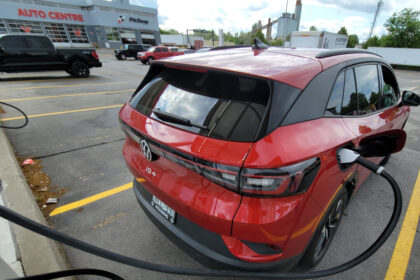
In fact, as the world’s largest manufacturer of electric vehicles (EVs), China may be hoping that at least some of the potential economic toll from soaring oil and gas costs can be offset by a rise in the purchase of EVs, which don’t – at least directly – rely on oil.
Other analysts are not so sure. Alicia García-Herrero of Bruegel had this to say:
The disruption to global energy flows triggered by the United States and Israel’s attacks against Iran are a severe test of energy security, export resilience and geopolitical strategy for China, the world’s largest oil importer. While Beijing’s massive oil stockpiles and diversified sourcing offer short-term protection, a prolonged conflict over Iran could exacerbate domestic economic pressures and undermine China’s global goals.
Several economic impact scenarios exist for China. The first is the energy shock itself. Despite the reserves China has built, and the alternative energy sources it has developed, in the short term China is affected by the war in fundamental ways shared by much of the world. With oil flows disrupted, especially through the Strait of Hormuz, China is already experiencing pressure on its existing inventory. This has led to significantly higher prices at the pump, which, if prolonged, could lead to social unrest. This is a major risk for the Chinese Communist Party (CCP) and the government it leads. The government determines pricing, but has the challenge of keeping the price of gasoline and diesel acceptable to manufacturers, transport companies, and ultimately, to the consumer at the pump.
For China, the Iran war is likely to exacerbate existing economic issues, including a lack of consumer demand and deflation.
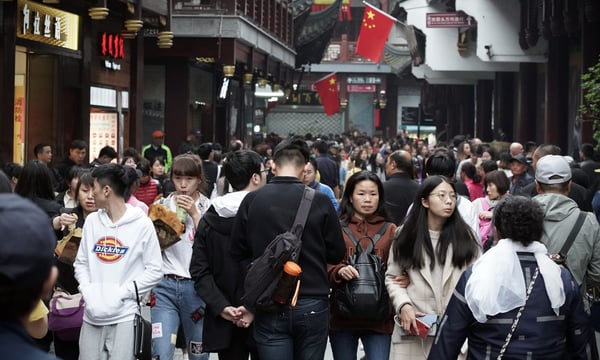
The Diplomat spoke with a Chinese economist, Wang Wei, whose name we have changed in order to avoid retaliation against him. His observations and predictions have served us well for more than two decades. These anecdotal remarks illustrate what the typical Chinese citizen is seeing at street level, which is then borne out by statistics and other reporting.
First, Wang said that “China’s economy is seeing everything drop in price. Food has gone down in price. Products have gone down in price. This can’t go on.”
He’s right. In fact, as Bloomberg reported, prices across the board have become so deflated, and for so long, that another Chinese economist saw a crisis even before the Iran war began. “There is little time to waste for China to get itself out of this deflationary spiral,” Bloomberg wrote, citing Zhu Tian, an economics professor at China Europe International Business School (CEIBS). “The government must pour more money into encouraging consumption – to the tune of half a trillion dollars – via unlimited vouchers for households to drive spending. If not, China’s economy is in dangerous trouble.”
“Historically, deflation is extremely rare,” Zhu told Bloomberg. “If prices are down for three years and inflation doesn’t come back, then people will believe it won’t come back. And that’s when China becomes Japan.”
Wang went on to tell The Diplomat that he has a friend who is a boss at a technology company in Shanghai. They are in an economic development zone. His friend says 8 out of 10 companies in his zone have left and/or gone out of business. This tracks with other anecdotal observations that the foreign business presence in China has hollowed out dramatically compared to the early 2010s.
Amid the economic troubles, some Chinese are opting out of the rat race and leaving China’s urban hubs entirely. “Many of my friends from school have moved to Hainan Island. You can rent a seaside apartment there for $1,000 a month,” Wang concluded. This is true, as well, as evidenced by multiple advertisements. And many flats are listed much lower.
Overall, the impact of the Iran-U.S. war on China’s economy is uncertain, but any diagnosis must be put in the context of the economic woes that have been plaguing China for the last three years. If the Chinese government can muster the right set of tools to increase consumer confidence and jump-start purchasing again, then it likely will find its way through the crisis. China needs to take measures that address the effects of the war, to be sure. But it must not ignore the underlying foundational problem of severe deflation that is weakening the economic structure as a whole. Otherwise the fixes for the short term will be just that: short term.