One can imagine the shock at No. 2 Chaoyangmen South Boulevard, Beijing, the home of China’s Ministry of Foreign Affairs, upon hearing the news that in the early hours of June 22 Iranian time, the United States had attacked, in extraordinary fashion, the three key sites of Iran’s nuclear enrichment program.
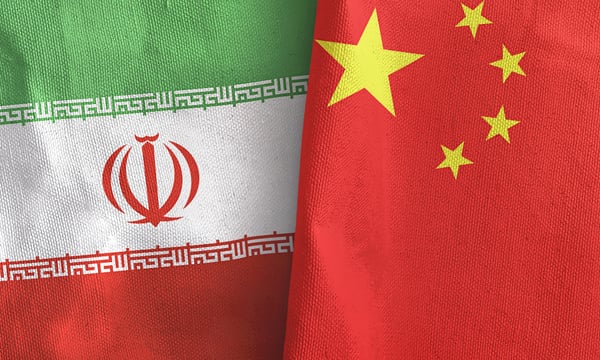
It was only four years ago that China inked a $400 billion, 25-yearlong strategic partnership with Iran, focusing on trade, investment, energy, infrastructure, military cooperation, and key for China, a ready and steady source of oil, presumably at preferential pricing.
Yet now, China’s strategic partner has just seen its nuclear enrichment program – which could lead to a nuclear bomb – attacked.
What must be worst for China is that Iran didn’t even see the B-2 bombers and their bunker-busting payloads coming. From a Chinese perspective, this is not just a loss of face for Iran, but also a loss of face for China. Beijing does not like to be seen backing a losing hand, much less depending upon it.
It was only just over two years ago that China used, and then nominally won, a great deal of political capital when it successfully finalized a rapprochement between long-time foes Iran and Saudi Arabia. China has limited experience in engaging in such high-level international diplomacy, much less with success.
However, it turns out that the real meat of the negotiations between Iran and Saudi Arabia took place over several rounds beginning in 2021 in Iraq and Oman. It was only in the final days of the negotiations, the United States Institute of Peace reported, that China was brought in as the closer, and was magnanimously given the win. As the institute related, “The two regional rivals have conducted talks in Oman and five rounds in Iraq in the past two years. They could have chosen either country to get to the finish-line, but instead chose China” – shortly after Xi Jinping visited Saudi Arabia. Notably, China has been all but absent on the diplomatic stage during a true crisis involving Iran.
Since the United States bombed Iran’s nuclear facilities, China has made several statements criticizing and condemning the U.S. actions, and questioning U.S. credibility going forward. The remarks from China, however, have been predictably boilerplate, lacking in either force or conviction.
The Chinese Consulate General in New York put out a statement on June 22 saying that “China strongly condemns the U.S. attacks on Iran and bombing of nuclear facilities under the safeguards of the IAEA. The actions of the U.S. seriously violate the purposes and principles of the U.N. Charter and international law, and have exacerbated tensions in the Middle East.” The statement went on to call for a ceasefire, to keep civilians safe, and the start of dialogue.
“China,” the statement said, “stands ready to work with the international community to pool efforts together and uphold justice, and work for restoring peace and stability in the Middle East.”
Why the boiler-plate language from China? Why the reiteration of the same old tropes? Where, if China is truly Iran’s friend and strategic partner, is the outrage?
China’s foreign policy is still on training wheels. The Chinese Communist Party (CCP) lacks the real-world experience with and exposure to the rest of the world to be able to successfully read the room or respond to it appropriately – at least at the rapid-fire pace necessitated by a crisis. China’s near silence on the dramatic, power map changing events of June 22 expose not only its discomfort with the U.S. strikes, but also its inability to respond quickly with new ideas and leadership of its own.
China and Iran find themselves on the same side of certain historical and cultural issues.
To the Chinese, even the very idea of monarchy can cause a person to curl one’s lip in distaste. China overthrew its monarchy in the early 20th century, and the CCP has been very successful since in teaching its citizens that the evils of emperors, and the greed of imperialists, is what kept China poor and backward for so many centuries. Iran has followed a similar trajectory since Islamist revolutionaries overthrew the Pahlavi dynasty in 1979.
It took decades, but finally, and often one piece at a time, the United States admitted to having collaborated with the United Kingdom to remove Iran’s democratically-elected leader, which took place on August 19, 1953. Iranian Prime Minister Mohammad Mossadegh was the victim of a plot to secure Iran’s oil for British interests, and that, as Lapham’s Quarterly recounted, put him squarely in the cross hairs of “the world’s preeminent postwar powers.” The coup – which didn’t work the first time, but did the second – put the Iranian monarchy in the person of the Shah firmly back in power for the next 25 years. But it also made the U.S., and the West in general, a prime target for displays of Iranian nationalism in the post-Shah era.
This is another point China and Iran have in common: their rulers both find political capital among their relative domestic audiences in denouncing previous foreign involvement in their countries. The fuel that fires much of both China’s and Iran’s expressed anger and resentment toward the West in general also forges a bond of shared victimhood that is a common trait among autocratically-led countries.
Against that backdrop, it is notable that, as Iran quite literally came under attack by the hated Americans, China sat on the sidelines, only offering some empty words of support. Indeed, Iran’s foreign minster hurried to Russia – not China – in the immediate aftermath of the U.S. bombing in a quest for support. Tehran apparently understands all too well Beijing’s limitations.