The Chinese Communist Party’s (CCP) main foreign propaganda outlet, the Global Times, published an editorial in November 2019 stating that the West “cannot have any influence on Xinjiang. They just cannot do anything about it.” Only a few days after this article was published, the Xinjiang regional authorities held a press conference to announce that the “vocational and education training centers,” how China disguised its detention camps for Uyghurs, had been closed.
At first glance, this might appear to be a pre-planned scheme: to “re-educate” millions of Uyghurs in the camps, then “release” them into other forms of control, such as coercive labor, while transferring those deemed “uneducable” to prisons. China claims that “terrorism” has been successfully eradicated and that everyone now lives in peace, with Uyghurs joyfully dancing in the streets in traditional costumes.
However, a peer-reviewed analysis recently published in the journal Modern China suggests that Beijing did respond to international criticism of its policies in Xinjiang, which pushed the Chinese leadership to repeatedly adjust its approach. China moved through several stages: initially showing lax control over the narrative, then concealing the camps’ existence, subsequently acknowledging and justifying them, followed by downsizing and reframing the policy, and eventually partially abandoning the practice.
Does China Care About Its Human Rights Image?
Surveys show that negative views of China in developed countries have reached historic highs, with human rights cited as the main reason. A negative international image has been seen in Beijing as an obstacle to China’s growing global influence. When international criticism mounts, China goes on the offensive. It issues rapid diplomatic rebuttals, threatens governments and NGOs, mobilizes other governments to sign counter letters, organizes events, publishes reports through state-affiliated organizations posing as NGOs, and spreads propaganda, including mobilizing foreign influencers.
However, when international pressure is sustained, China can be pushed to change the repressive practice itself. Xinjiang was not the first case in which this occurred. One of the most notorious Chinese systems of arbitrary detention, the “re-education through labor” camps, was abolished in November 2013 after a publicized scandal involving a letter from a labor camp prisoner found among Halloween decorations by an American consumer.
Beijing also repeatedly shifted its approach to organ harvesting from prisoners. After years of denial, officials admitted in 2005 that prisoners were the main source of organs. Following the establishment of a coalition investigating organ harvesting from Falun Gong practitioners in 2006, China introduced ethics committees to oversee organ transplants. As pressure continued to mount, the authorities announced plans to gradually phase out the practice and formally declared it ceased in 2015. However, later research suggests that official transplant data may have been falsified, making it difficult to independently verify whether the practice has actually ceased or to what extent it has been reduced.
Experimental “De-extremization” Camps
In Xinjiang, the repression followed a similar pattern: it was initially denied, then partially acknowledged, retrospectively legalized, and eventually partially discontinued and reconstituted following sustained pressure.
The path to mass detention in Xinjiang began in the early 2000s, when China intensified its campaign against the “three evils” (terrorism, separatism, and extremism). In practice, this involved various forms of repression targeting the predominantly Muslim ethnic minorities, especially the Uyghurs. Violent clashes between Uyghurs and Han Chinese in Urumqi in July 2009 were followed by further government crackdowns. Individual Uyghurs became radicalized and committed several deadly terrorist attacks on civilians.
After Xi Jinping came to power, he pledged to “stabilize” the situation in Xinjiang. The “de-extremization” camps for Uyghurs were first introduced in the second half of 2014, following Xi’s visit to the region, when he called for “mass prevention and treatment” of “extremist” thoughts. In their early stages, these camps were run experimentally under varying conditions and schemes. At that time, there was little international awareness, and Beijing had not yet been pushed to centrally control the narrative. Local authorities then publicly praised the camps as successful innovations that should be expanded.
“Strict Secrecy” as International Attention Builds
Throughout 2017, however, events accelerated rapidly. In February 2017, region-wide provisions ordered the establishment of “training centers,” and the following month new regional “de-extremization” regulations vaguely authorized systemic brainwashing. Detentions increased sharply, and hundreds of thousands of Uyghurs and other Muslim minorities were confined.
In the early months, local media were still reporting on the camps, but this soon changed as international awareness gradually increased. The first, at that time still limited, information was published by Radio Free Asia in April 2017. The following month, internal speeches show that regional leaders were worried about growing awareness abroad. In May 2017, Xinjiang’s party chief, Chen Quanguo, delivered an internal speech in which he stated that “hostile forces at home and abroad have already by various means acknowledged that a generation of people are being trained in some places.” The same month, the United Front Work Department established a new special bureau for Xinjiang to provide guidance on “sensitive issues.” Around this time, a centralized internal information embargo was imposed.
Concealment became a deliberate strategy. For more than a year afterwards, before the existence of the camps was partially acknowledged, no information about them was published in China.
Meanwhile, international awareness of mass arrests of Uyghurs was significantly rising. The first detailed account of the mass re-education system in Xinjiang was likely published by The Globe and Mail in September 2017, followed by further reports worldwide. In November 2017, head of Xinjiang’s main security body, Zhu Hailun, issued an internal telegram emphasizing the “strict secrecy” and “high sensitivity” of the camps, and forbade camp staff from using mobile phones.
Re-branding the “Vocational Education Training Centers”
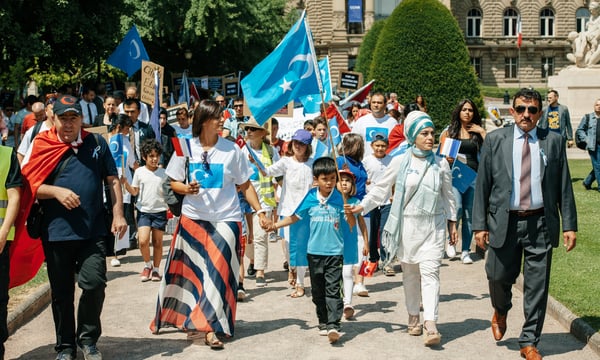
By 2018, international pressure had begun to mount. In March 2018, the World Uyghur Congress organized demonstrations in 15 cities worldwide. That same month, the U.S. Congressional-Executive Commission on China called for an investigation of the situation and the imposition of sanctions.
In April 2018, convincing evidence of the camps’ existence was published by Canadian student Shawn Zhang, who created a database of the camps using satellite photos and public tender documents. Building on that, German researcher Adrian Zenz published a detailed analysis and estimated that the number of detainees had reached 1 million.
In June 2018, an internal meeting of Xinjiang’s leadership was held, attended by China’s minister of public security Zhao Kezhi, who voiced concerns about increasing international scrutiny. Zhao said that the camps had to be legalized to prevent criticism. By mid-2018, concealment was no longer a viable strategy, and China shifted course.
In August 2018, the issue was raised at the United Nations for the first time, when the U.N. Committee on the Elimination of Racial Discrimination confirmed the credibility of the evidence on the camps. In response, Chinese diplomats officially acknowledged the existence of “vocational education training centers” for the first time but still denied that they were “re-education” or “counter-extremist” centers.
This was not only a rhetorical move. In October 2018, the camps were retrospectively “legalized” through regional laws. Following that, the authorities organized sham trials across the camps and transferred some of the detainees to prisons and factories. Regional regulations and staged trials were to create the appearance of due process.
Simultaneously, the authorities launched a massive propaganda campaign to justify the camps, now portraying them as successful counterextremist and re-education measures, in contradiction to earlier statements. Stories of “happy trainees” expressing gratitude to the authorities for “transforming” them were publicized across various media. During the first months of the campaign, at least 1,000 international guests visited the camps on staged tours. Many of these stories responded to specific allegations by international actors, suggesting that international narratives were spilling into China itself.
All “Trainees” Have “Graduated”
In early 2019, the tone shifted again. Despite having recently defended the camps as a long-term necessity, officials began to describe them as temporary measures. China presented its intent to gradually phase out the camps in March 2019 in its response to the U.N. Human Rights Council. However, even after that, individuals were still being given sentences of several years in the camps, suggesting that the downsizing was intended to take several more years. As late as May 2019, individuals were still being sentenced to three years of “study.”
Meanwhile, international pressure escalated significantly in the second half of 2019. The United States announced sanctions on Chinese institutions, individuals, and companies. In November 2019, two sets of secret internal documents were published, the so-called Xinjiang Papers and China Cables, providing details of detention conditions and official policies. Chinese propaganda responded with irritation, describing the materials as full of “nonsense, lies, and sins.”
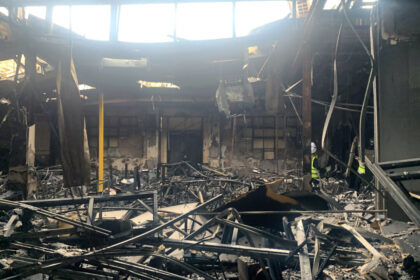
A few days later, in early December 2019, the regional authorities held a press conference announcing that all “trainees” had “graduated.” Independent reports confirm that at least some of the camps were then physically dismantled and some detainees released, while others were transferred to prisons and pretrial detention centers, or remained under coercive conditions in so-called industrial parks. While repression has continued in different forms, the specific system of mass detention combined with compulsory ideological education has largely disappeared.
Denial, Then Acknowledgment, Then Abandonment
Zhu Hailun and Chen Quanguo were both de facto demoted, losing important positions within the CCP despite being below retirement age. This suggests that Beijing was not fully satisfied with their handling of the campaign.
Their successors sought to “normalize” the situation by decreasing securitization in public spaces. Under the new regional leadership, public discourse has shifted toward development, stability, and openness. In May 2022, U.N. High Commissioner for Human Rights Michelle Bachelet was invited for an official visit to Xinjiang, where she visited one of the former camps and Chinese officials assured her that all the camps had already been dismantled. The camps also gradually disappeared from the official narrative, even in documents related to counterextremism.
China repeatedly changed its narratives and policies regarding the camps. International pressure appears to have played its role in prompting hasty or unplanned decisions. It shows that even powerful authoritarian states remain sensitive to sustained international attention, especially when it damages their global image. Naming and shaming by journalists, researchers, and civil society actors mattered.
None of this means that China admitted wrongdoing or presented these changes as concessions. Beijing seeks to avoid any impression that it yielded to outside pressure. The regime has also gradually adapted and the situation in Xinjiang is nowhere near peaceful. Visible, arbitrary and centralized repression gave way to formally legal, more concealed, and decentralized forms of repression. Many innocent Uyghurs remain incarcerated, and millions continue to live under surveillance, with their rights restricted.
The fact that China appears sensitive to international scrutiny should encourage the global community to continue investigating and speaking out.