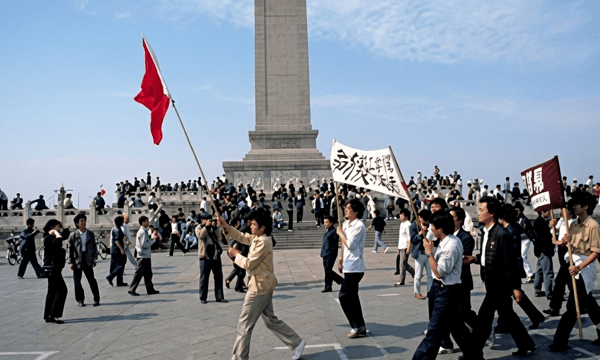
Thirty-seven years ago, I was a middle school student who took to the streets of China, alongside hundreds of thousands of people. The majority of those who died in the resulting military action against protesters were not students. They were workers – ordinary citizens. I have never forgotten that.
After the crackdown, China increasingly relied on economic growth to maintain political stability and state legitimacy. In the process, a society built on surveillance, censorship, and political control gradually took shape, and was steadily strengthened through economic growth and technological advancement. Millions of people learned the same lesson: that silence is safer than honest speech.
I have spent more than three decades investigating labor conditions inside Chinese supply chains, and confirmed a pattern. When a society has no space for free expression, the pressures of economic growth often fall most heavily on those with the least power to resist them.
The consequences became especially visible during China’s state-owned enterprise reforms in the late 1990s. Tens of millions of workers lost their jobs as state industries were restructured. Entire communities were transformed, and countless families experienced economic hardship. Yet despite affecting the lives of tens of millions of workers, opposition remained fragmented and was quickly contained before it could develop into a broader national movement.
China’s lower labor costs and faster production were what transnational capital wanted, and the political order that emerged after Tiananmen was what made them available.
Tens of millions of migrant workers, many of them parents of young children, left their homes to labor in factories. Millions of children grew up in rural villages, seeing their parents for perhaps a few days each year. More than three decades later, the economic miracle built on family separation and low wages remains fundamentally unchanged.
But workers did not stop resisting. In 2018, nearly three decades after Tiananmen, workers at Jasic Technology in Shenzhen attempted to form a trade union in accordance with Chinese law after growing frustrated with fines, excessive overtime, abusive management practices, low wages, and poor working conditions. Students from more than 10 universities across China traveled to Shenzhen to support them. Police eventually detained around 50 people. Many students were sent back to their schools or hometowns, put under surveillance, or forced into admitting their “mistakes.”
This was one of the post-1989 cases in which students openly supported workers. It revived memories of Tiananmen.
Every year, China handles millions of labor and employment disputes, while activists continue to face arrests and NGOs are shut down. Most cases are quietly contained before they attract broader public attention. These are not isolated incidents. They reflected a broader post-Tiananmen pattern: a continued suppression of independent worker organizing.
The consequences did not remain within China. As Chinese manufacturing has expanded across Southeast Asia, Africa, and Europe, the labor system that emerged after Tiananmen expanded alongside it.
At BYD’s projects in Brazil, Hungary, and other overseas locations, workers described excessive working hours, strict surveillance, and restrictions on workers’ freedom. Local media and labor authorities in Brazil also reported withheld passports, excessive overtime, and “slave-like” labor conditions, prompting authorities to suspend parts of the project.
BYD disputes these characterizations. But labor conditions at BYD’s overseas projects are not fundamentally different from the employment practices long seen in many of its factories in China.
More than 90 percent of BYD’s production capacity remains based in China, while the company has long benefited from international investment and access to overseas markets. In this sense, BYD’s global expansion illustrates how China’s low-labor-rights development model has gradually become embedded in the global industrial system.
As economic growth and global capital became increasingly tied to this system, calls for political reform and worker rights were pushed further to the margins.
China itself is also bearing the social costs. Families fractured by migration, social trust that has steadily eroded, and the rise of what the Chinese call tang ping, or “lying flat,” as growing numbers of younger people conclude that striving no longer feels meaningful, are just some of the examples.
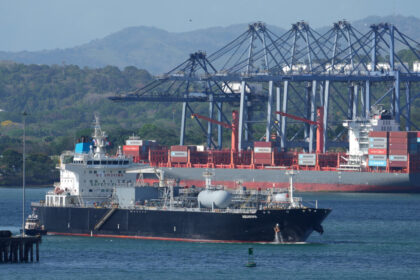
China now accounts for roughly 30 percent of global manufacturing output and occupies a dominant position in supply chains tied to rare earths, battery materials, and other strategically important industries.
As China’s approach to development is increasingly seen by other nations as a template for success, democratic societies may eventually come under pressure to accept lower labor standards and more coercive forms of governance to remain competitive.
For more than three decades, much of the world economy has moved in the same direction, toward the weakening of independent labor organizing and effective worker representation.
Worker rights repression has increasingly been viewed as a competitive advantage. Have the United States and the global economy, perhaps unintentionally, continued to reward systems built on the suppression of workers’ rights?
The world once believed economic integration would gradually liberalize China. Instead, globalization adapted, absorbing the political logic that coalesced after June 4, 1989. In that sense, Tiananmen marked a turning point not just for China, but for the global economy.