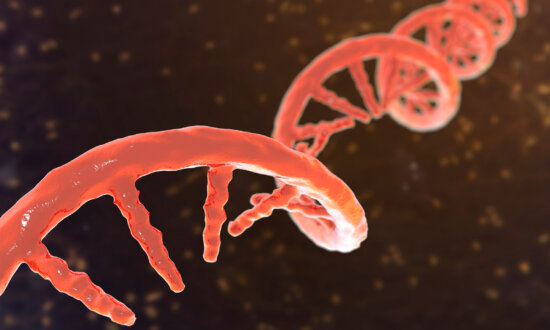
A top-tier Chinese university said on July 26 that it is investigating gene editing research by one of its researchers following reports that scientists treated a 6-year-old girl as part of their research, who died during the unprecedented human trial.
Shanghai Jiao Tong University School of Medicine, one of China’s Ivy League-level institutions, said in a statement that it “attaches great importance to the matter and has established a special working group to conduct a comprehensive investigation.”
New York-based nonprofit science watchdog Retraction Watch and peer-reviewed journal Science disclosed on July 23, on behalf of her grieving family, the death of the 6-year-old girl, who underwent an experimental gene editing procedure in a clinical trial conducted by Shanghai Jiao Tong University researchers at the affiliated Xinhua Hospital.
The girl had been diagnosed with global developmental delay in March 2023, her parents told Science. Genome sequencing later pointed toward a single-base mutation in her CHD3 gene as the cause. The rare mutation, which causes Snijders Blok-Campeau syndrome, impacted a vital protein essential for brain development, leaving her with challenges in her motor and language skills that became more evident when she turned 4.
The condition doesn’t usually impact life expectancy, University of Montréal geneticist Philippe Campeau, who helped link the condition to the CHD3 gene, told Science. Symptoms can range from mild cases where the only obvious indication is a slightly enlarged head, to severe cases with intellectual deficits, seizures, and heart problems.
The girl, who died in March 2025 seven days into the world-first clinical gene editing trial, which was aimed at removing her condition, had milder symptoms.
Her parents told the watchdog that they were persuaded by the team of China-based researchers, led by neuroscientist Qiu Zilong, to fund an experimental procedure that would edit one nucleotide in the chromosomes of their daughter’s treated cells, changing a T to a C in her mutated gene. The parents and relatives were asked to contribute $860,000 toward the experiment.
Following the girl’s death, the scientists returned the funds, and the hospital was fined by local authorities, her parents told Science.
While the clinical trial was never published in a medical journal following the death, Science and Retraction Watch revealed that the researchers injected doses of two novel engineered viruses into the girl’s spinal fluid. The method is currently the most common delivery system for gene-editing therapy. The trial was the first attempt to use this particular gene-editing method to treat a human.
The family told the watchdog that the cause of death was identified by the hospital’s ethics committee as a severe immune response to the procedure. They also said that potential death was not explicitly listed as a risk in the procedure.
Qiu and his co-authors published related research in Nature in February 2026 that involved conducting the CHD3 gene editing procedure on mice. A peer reviewer of the study, Campeau told Science he did not notice the extent of changes made when the mouse study—whose original experiments were funded by the family—was resubmitted without the family’s genetic data or a sentence recognizing their “participation and support.”
He approved it for publication. The paper only mentioned that research “bridging the gap between preclinical research and clinical translation remains a significant challenge.”
The child’s parents told Science they submitted a formal request to the School of Medicine dean that the mice model paper be retracted “to prevent more children from suffering and our blood and tears flowing in vain.” According to Science, the experiment was also conducted on monkeys, after which the ethics committee approved the family’s clinical trial on Jan. 2, 2025. Other research, published Feb. 17, would soon show that monkeys receiving similar gene-editing therapies suffered moderate to severe liver damage.
The school said in its statement that it has “always attached great importance to research integrity and research norms, and resolutely opposes conducting medical scientific research in violation of research ethics.”
“The medical school will take this matter seriously based on the investigation results,” it said. “We appreciate the concern and oversight from all sectors of society.”
A spokesperson from Nature told The Epoch Times by email, “We are looking into the matter carefully following an established process.”
The same day that the family’s report of their daughter’s death was published by Science, Shanghai Jiao Tong was added to the Pentagon’s list of research institutions deemed a threat to U.S. national security.
The civilian institution joins 87 other institutions in China that have been barred from projects involving U.S. federal funding and collaboration starting fiscal year 2026.
Scientists in China and around the world are vying to be the first to deliver safe gene-editing treatments, with most at this early stage focusing on treating life-threatening conditions.
Some scientists have had success in gene-editing treatments, including the most recent breakthrough last year by a Philadelphia team who used lipid nanoparticles delivered by intravenous infusion to treat a baby boy with a life-threatening liver disorder.