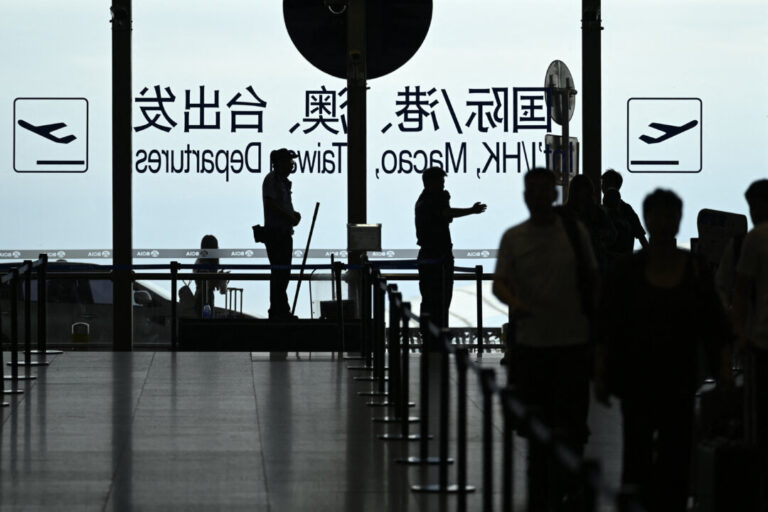
Public employees within the system of the ruling Chinese Communist Party (CCP) are facing unprecedented social controls, as the Chinese regime has started scrutinizing their overseas contacts, Chinese residents have recently told The Epoch Times.
In early January, directives were issued internally across the public security, procuratorial, and judicial sectors of the Chinese regime, Liu, an insider within the CCP’s judicial system who gave only his last name out of fear of reprisal, told The Epoch Times.
“Any contact involving individuals with overseas backgrounds is now deemed a potential risk, requiring avoidance and formal reporting—with severe cases even mandating the complete severance of ties,” according to the directives, Liu said.
As a result, people working within the Chinese regime’s judicial system are generally avoiding meeting with old acquaintances returning to China from abroad, he said.
Liu said he believes that the primary reason the Chinese regime is strictly guarding against public employees’ contacting people overseas is to prevent classified information from being leaked.
Overseas contacts often include “former classmates, old friends, online acquaintances, or relatives,” he said.
“When chatting with friends or family abroad, some people may inadvertently disclose internal details, including sensitive matters currently unfolding—such as the arrests of corrupt officials or incidents like the purge of Gen. Zhang Youxia,” Liu said.
Huang Kunming, a San Francisco resident using a pseudonym out of fear of reprisal from the Chinese regime, told The Epoch Times that he returned to China for a visit in early March and that the situation in China is very different from that of three years ago.
“I reached out to a middle school classmate in Shijiazhuang who works within the public security,“ he said. ”I sent him three separate messages attempting to schedule a meeting, but he never replied. On another occasion, we arranged a class reunion dinner; he initially agreed to attend but then backed out at the last minute—and when I tried calling him, he wouldn’t pick up.”
Huang said he later learned through another classmate that the classmate working at the Public Security Bureau was subject to internal regulations requiring him to seek approval from superiors before interacting with individuals from abroad.
“He had to provide details regarding the background of the classmate he was meeting—particularly if that classmate was visiting from the United States—as they were required to conduct an internal review; consequently, he did not dare to meet with me privately,” Huang said.
Expanded Surveillance
The restrictions seem to have expanded to other state agencies, according to Chinese residents.
Song Xuan, an engineer who immigrated to the UK years ago, using a pseudonym out of fear of reprisal, told The Epoch Times that a friend who is a Chinese official serving within a ministry under the State Council also avoided contacting her directly when she visited China recently.
“She did not respond to my invitation to meet via the commonly used WeChat app. Instead, she borrowed a family member’s phone to call an intermediary and explained that due to the nature of her work, ‘it would be inconvenient to meet at this time, but there will be plenty of opportunities in the future.’”
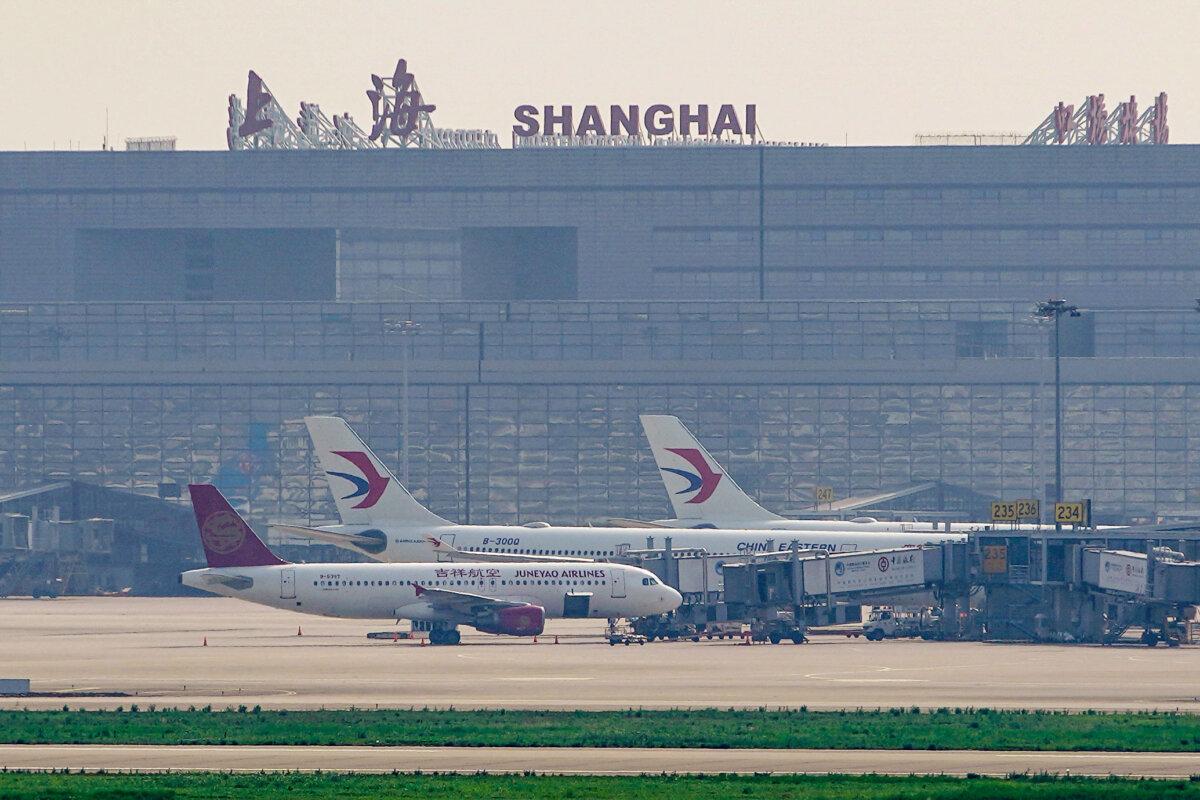
China Eastern Airlines aircraft are seen parked on the apron in Hongqiao International Airport in Shanghai on June 4, 2020. Aly Song/Reuters
Song said that because she had not returned to China for a few years, she had not anticipated that the authorities’ vigilance and suspicion toward overseas Chinese would reach such a level.
“It’s terrifying,“ she said. ”How has this regime become so paranoid? Are we on the brink of war? It’s absolutely bizarre.”
The CCP already maintains stringent controls over the flow of information in and out of China through a multi-layered system: the Great Firewall’s aggressive internet censorship, tight state control of media and online platforms, pervasive digital and physical surveillance, and restrictions on public employees’ freedom of movement via passport confiscations.
Zhou Liang, a former customs employee in Tianjin, using a pseudonym out of fear of reprisal, told The Epoch Times that shortly after returning from Australia, he invited a former colleague—who still works at the customs office—to meet up. His colleague declined the dinner invitation, citing a heavy workload.
“My colleague told me: ‘I’ve been really busy lately, so let’s skip the meal. I’m going to pick up my child tomorrow; let’s just meet at the school gate.’ In the end, we simply exchanged a few brief words right there at the school entrance,” Zhou recounted.
“[He said] meeting this way is safer even if his colleagues saw us; since there are surveillance cameras and it’s a public space, he could simply claim it was a chance encounter.”
Zhou said that this former colleague from the customs office revealed that departmental regulations require personnel to report any contact with individuals returning from abroad.
The Chinese regime passed its expanded anti-espionage law in 2023, targeting foreign-related individuals and entities. It also mandates that all Chinese individuals and organizations report espionage to state security organs. Since then, suspicion regarding foreign contacts has risen in the country and related restrictions have been continuously tightened in practice.
Internal documents leaked from various regions that were obtained by the Chinese language edition of The Epoch Times have indicated that China’s public employees are required to complete a “Registration Form for Overseas Relatives’ Information” and that any contact not reported could result in disciplinary action during political vetting.
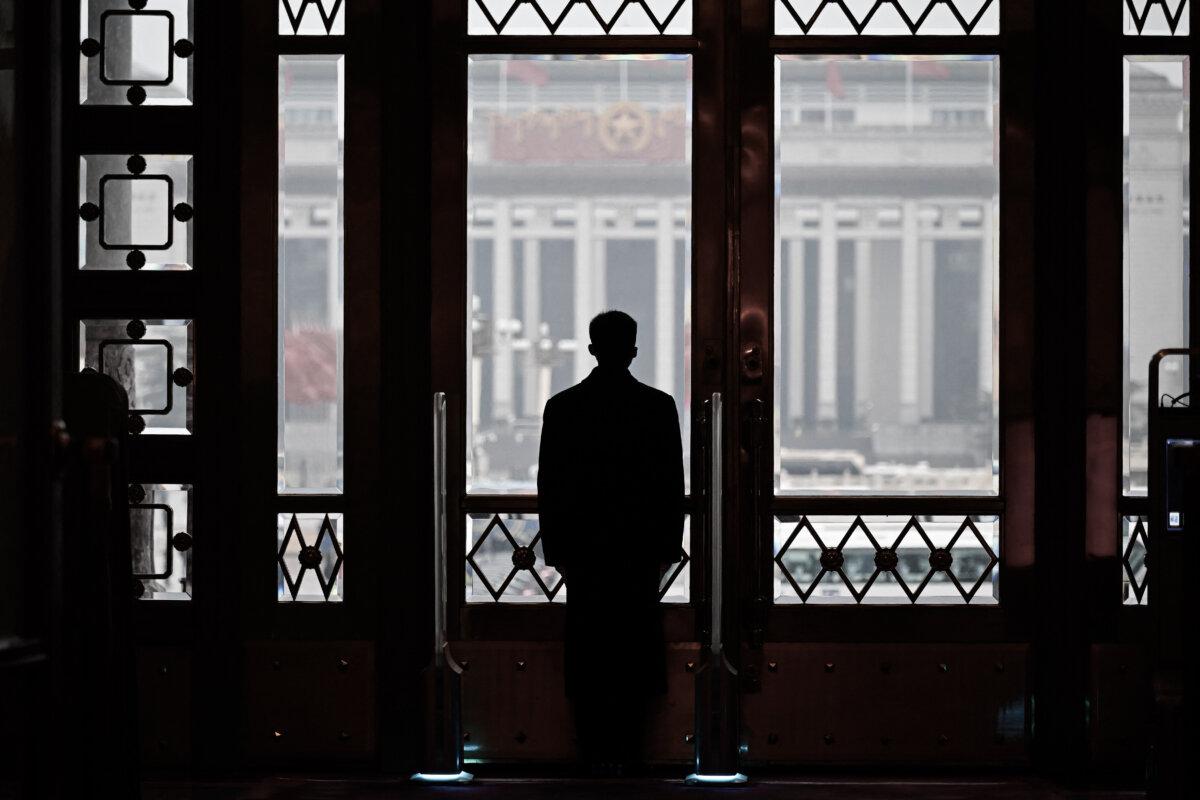
A security guard stands at his post during the opening session of the National People’s Congress (NPC) at the Great Hall of the People in Beijing on March 5, 2024. WANG ZHAO/AFP via Getty Images
This shows that the CCP’s administrative logic has expanded from “control of conduct” to “control of relationships,” said Deng, a veteran media professional in Tianjin. He gave only his last name out of fear of reprisal.
He pointed out that CCP authorities no longer focus solely on public employees’ actions in office.
“Rather, they have incorporated these people’s interpersonal networks and social interactions into their risk assessment framework,” he said.
“This method of control is severing connections between those within and outside the CCP’s system, and has also prompted many government employees to exercise greater caution in their daily social interactions.”
Wang Yibo contributed to this report.