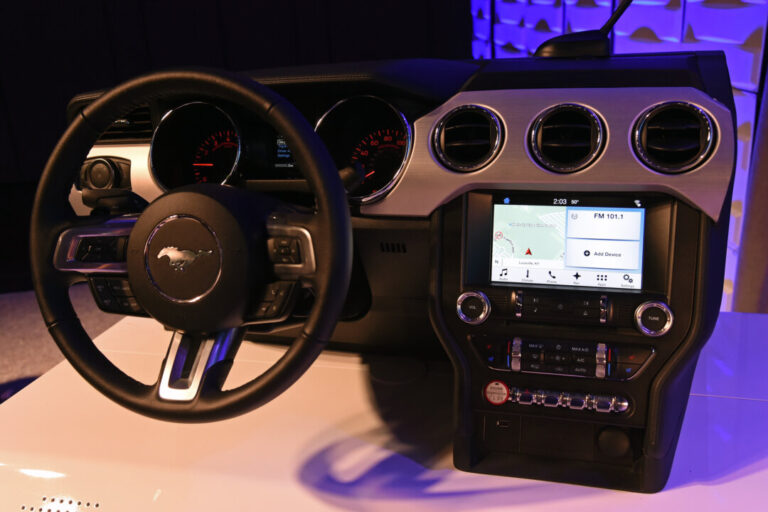

Ford’s Sync 3 communications and entertainment system is displayed during a Ford Motor Co. press event for CES 2016 at the Mandalay Bay Convention Center in Las Vegas on Jan. 5, 2016. Ethan Miller/Getty Images
In the 1962 cartoon “The Jetsons,” people of the future drove flying cars. In 1982, the NBC-TV show “Knight Rider” featured a talking car named KITT that could scan, self-drive, “turbo boost” through the air, and fire weapons.
Decades later, these science fiction scenes are becoming reality, with now highly complicated vehicles often called “computers on wheels.” But as that complexity grows, so do the trade-offs, as highlighted by frequent software-related recalls, rising vehicle prices and insurance costs, and higher maintenance fees, experts say.
Software-Defined Vehicles
Cars were much simpler during the eras of “The Jetsons” and “Knight Rider.” In his 2023 white paper on “Trends Towards Software-defined Vehicles,” Ismet Aktas noted most cars harbored a simple engine control unit (ECU), the “brain” of the engine that manages performance, ignition timing, fuel injection, and emissions.