

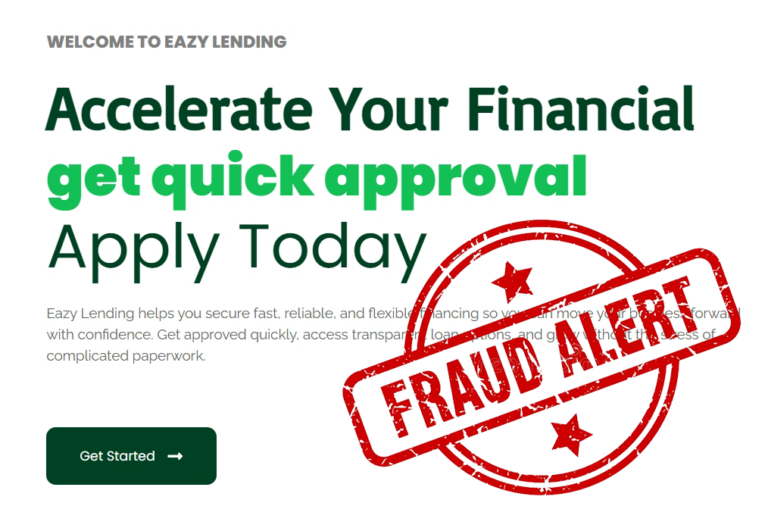
🚫 Eazylending.ca: A Fraudulent Trap Disguised as a Loan Service
🔎 How the Scam Works
- Gift Card Demands: Victims are pressured to buy gift cards as “upfront fees” or “loan insurance.” This is a textbook scam tactic—no legitimate lender will ever request payment in gift cards.
- False Loan Promises: The site advertises instant approvals and guaranteed loans, but these are fabricated claims designed to lure financially stressed individuals.
- Hidden Identity: Eazylending.ca provides no verifiable business registration, license, or regulatory oversight. This lack of transparency is a clear indicator of fraud.
🛑 Why It’s Dangerous
- Financial Exploitation: Borrowers lose money instantly when scammers redeem stolen gift cards.
- Identity Theft Risks: Sharing personal information with unregistered lenders exposes victims to long-term damage.
- Illusion of Legitimacy: By mimicking real loan websites, Eazylending.ca tricks consumers into believing they are dealing with a regulated company.
✅ The Importance of Being a Legitimate, Registered Company
- Regulatory Oversight: In Canada, lenders must be registered and comply with provincial and federal regulations. This ensures fair practices, transparent fees, and consumer protection.
- Accountability: Registered companies are subject to audits, legal consequences, and consumer complaint mechanisms. Fraudulent sites like Eazylending.ca avoid all accountability.
- Trust & Safety: A legitimate lender provides clear contact information, licensing details, and is listed in government registries. This transparency builds trust and protects borrowers.
- Consumer Rights: With a registered lender, borrowers have recourse if something goes wrong. With scammers, victims are left with no protection.
🚨 Red Flags to Watch For
- Upfront payments before loan disbursement.
- Requests for gift cards or cryptocurrency.
- No verifiable registration or licensing information.
- Too-good-to-be-true promises like “guaranteed approval.”
💥 Final Verdict
Eazylending.ca is not a lender—it is a scam operation. It thrives on deception, exploiting financial stress, and stealing through gift card fraud. Canadians lose hundreds of millions to fraud every year, and sites like this are part of the problem.
Always verify that a lender is registered, licensed, and transparent before sharing personal information or money. If you encounter Eazylending.ca, report it immediately and warn others.
✅ Quick Lender Vetting Checklist
(Inspired by the Eazylending.ca scam case)
Use this list before engaging with any loan provider. If a lender fails even one of these checks, treat it as a red flag.
🏛️ Legitimacy & Registration
- [ ] Registered Business: Confirm the lender is listed in provincial or federal registries.
- [ ] Licensing: Verify they hold a valid lending license in your jurisdiction.
- [ ] Transparency: Look for clear contact information, physical address, and customer service channels.
- [ ] Regulatory Oversight: Ensure they comply with consumer protection laws (disclosure of fees, interest rates, etc.).
💳 Payment Practices
- [ ] No Upfront Fees: Legitimate lenders never demand payment before disbursing a loan.
- [ ] No Gift Cards or Crypto: Requests for gift cards, cryptocurrency, or prepaid cards are automatic scam signals.
- [ ] Clear Terms: Fees and repayment schedules are documented, not improvised.
📜 Loan Terms & Promises
- [ ] Realistic Offers: Be wary of “guaranteed approval” or “instant loans with no credit checks.”
- [ ] Written Agreements: Legitimate lenders provide contracts with detailed terms.
- [ ] Interest Rates: Rates should align with market norms and legal limits.
🔍 Reputation & Verification
- [ ] Independent Reviews: Search for consumer feedback outside the lender’s own website.
- [ ] Watchdog Ratings: Check trust scores on scam-detection sites (e.g., ScamAdviser).
- [ ] Complaints: Look for regulatory warnings or unresolved complaints with consumer protection agencies.
🚨 Red Flags That Mean “Walk Away”
- [ ] Requests for gift cards or prepaid cards.
- [ ] No verifiable registration or licensing.
- [ ] Too-good-to-be-true promises.
- [ ] Pressure tactics or urgency (“act now or lose the loan”).
✨ Bottom Line
A legitimate lender is registered, licensed, transparent, and accountable. A scammer hides behind vague promises, demands untraceable payments, and avoids regulation.
